Tuesday 30th September
News from Rich M. of two GLOSSY IBISES, six Dunlin and 18 Lapwings at Top End.
SHETLAND
I spent quite a bit of the day entering BTO survey information onto their website, then we went to Vidlin, Swining and Voe for a look around without much success. We spotted a Polecat-ferret hybrid road casualty near Voe, which I assume must have been the result of an introduction because European Polecats are not native to Shetland.
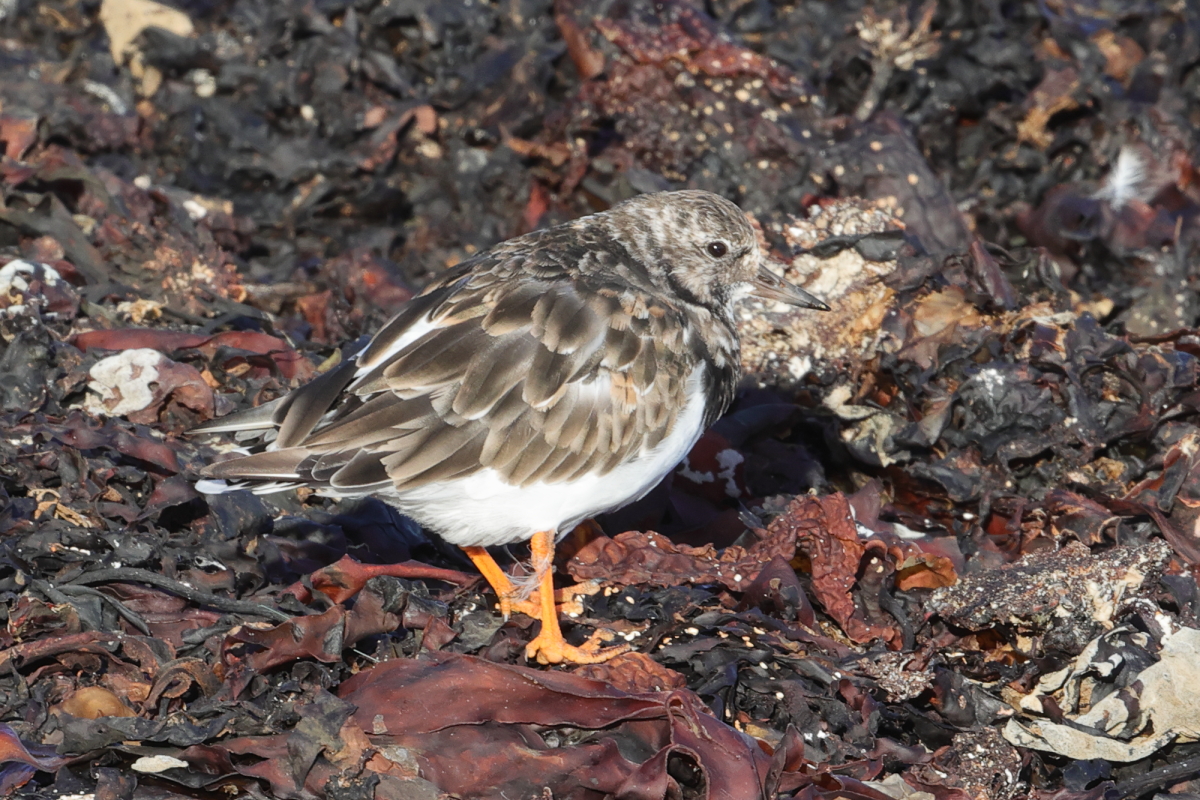
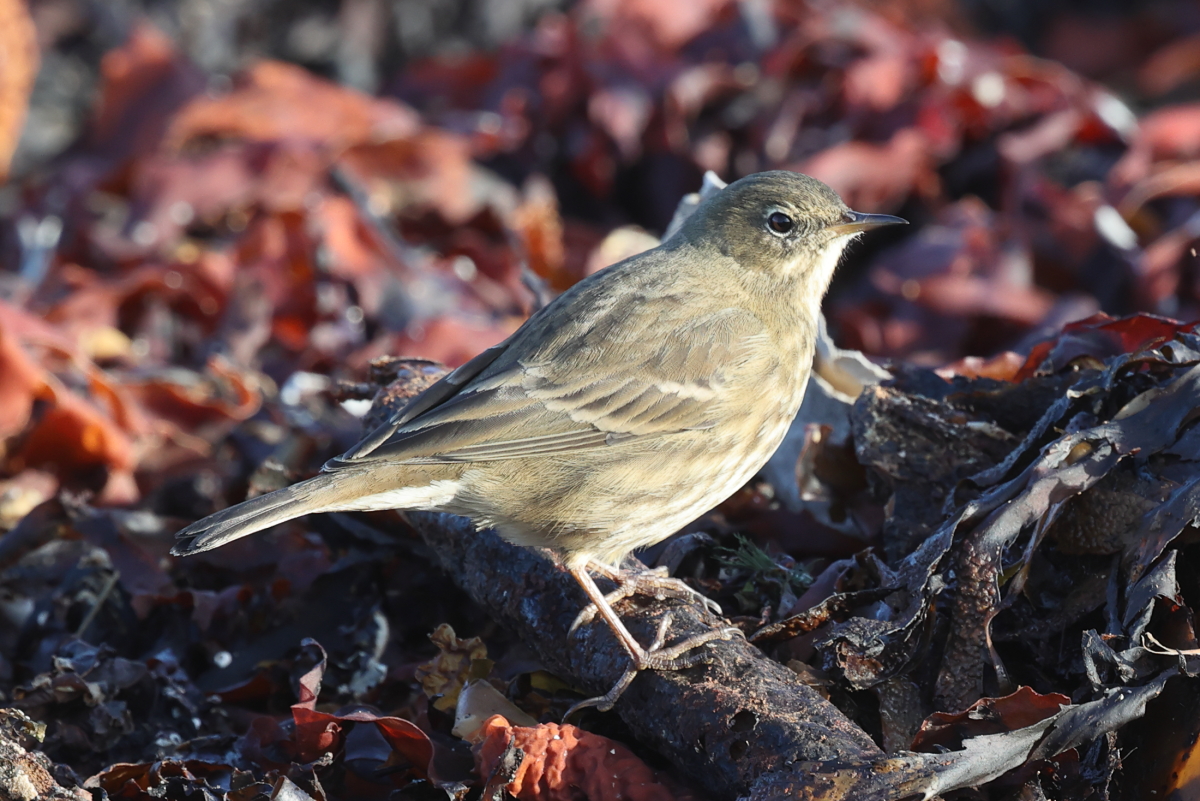
Turnstone (above) & Rock Pipit (below), Brei Wick, Shetland © Nigel Milbourne 2025
Monday 29th September
Merv P. got in touch and said that he and Rich M. saw two GLOSSY IBISES, a Black-tailed Godwit, a Ruff, six Dunlin, 39 Lapwings, eight Great White Egrets and nine Grey Herons. Thanks guys.
SHETLAND
We spent the day around Gulberwick, where we’re staying this week, and Lerwick. We dipped the Barred Warbler behind the school in Lerwick. Later, I spent some time photographing waders at North Taing, before going out for a meal in the evening with the crew.
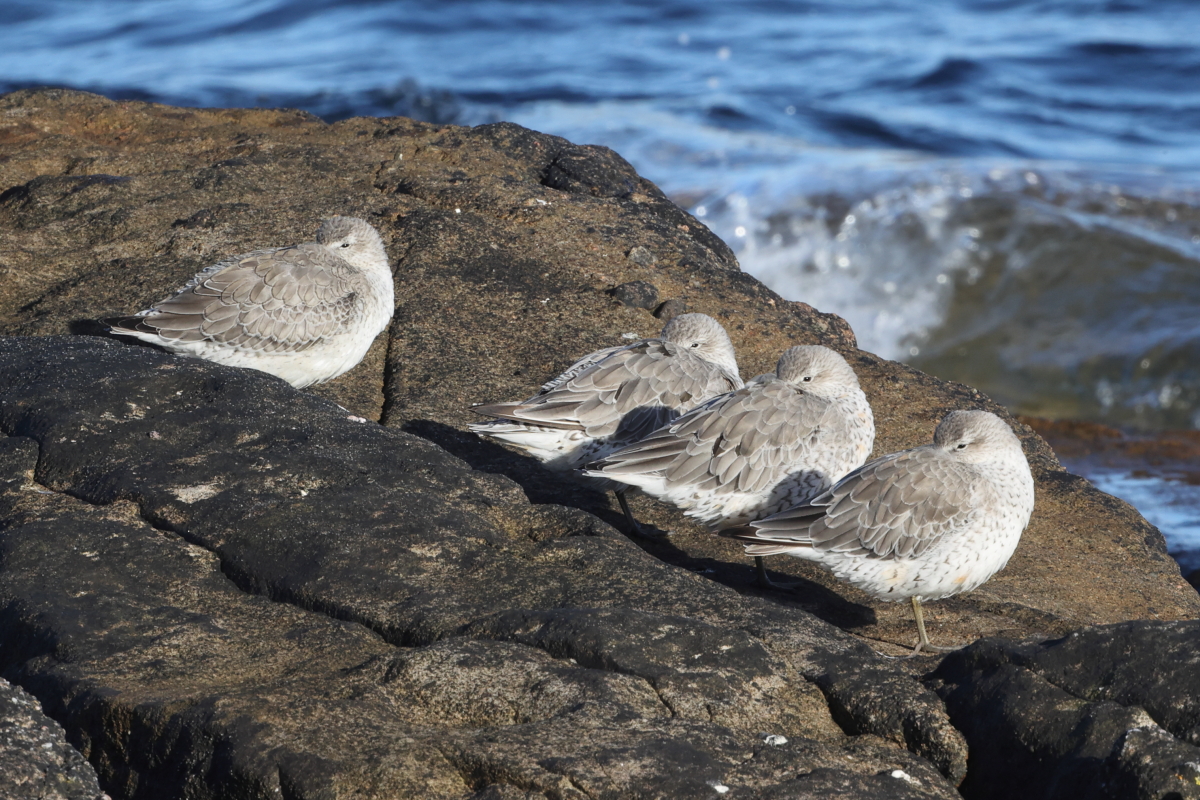
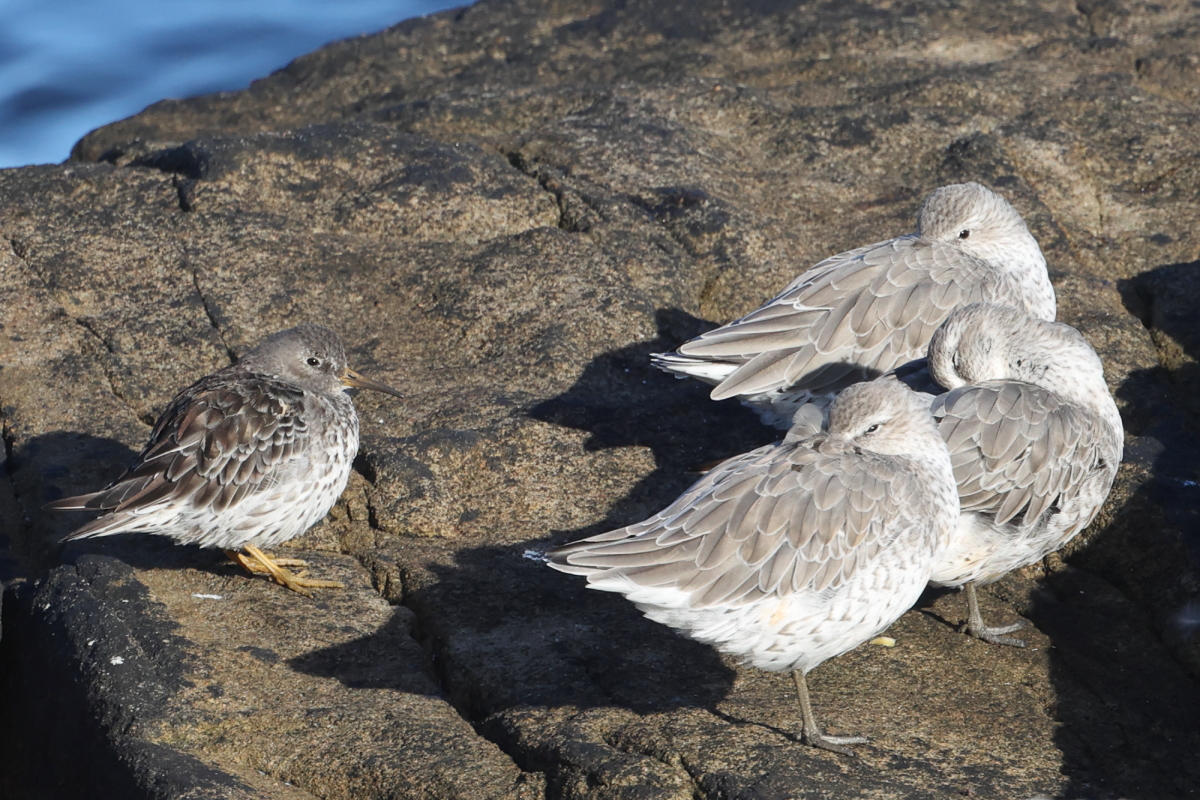
Knot (above), Knot and Purple Sandpiper (below) © Nigel Milbourne 2025
Sunday 28th September
News from Rich M. of two GLOSSY IBISES, five Dunlin and 34 Lapwings at the lake.
SHETLAND
After birding around some of Gulberwick where we’re currently staying, Sid and I drove to Geosetter and saw a Yellow-browed Warbler, a Bluethroat, Barred Warbler, Blackcap, Red Kite, Stonechat, Willow Warbler, Chiffchaffs and lots of Goldcrests. A Pied Flycatcher, two Great Northern Divers and a Black-throated Diver were at Quendale, and an Otter was on the Loch of Hillwell. At Spiggie, we noted a Ruff, five Barnacle Geese and three Pink-footed Geese among the Greylags, but I dipped the Blue-winged Teal again. We spent the last hour or so of daylight at Pool of Virkie watching the waders.
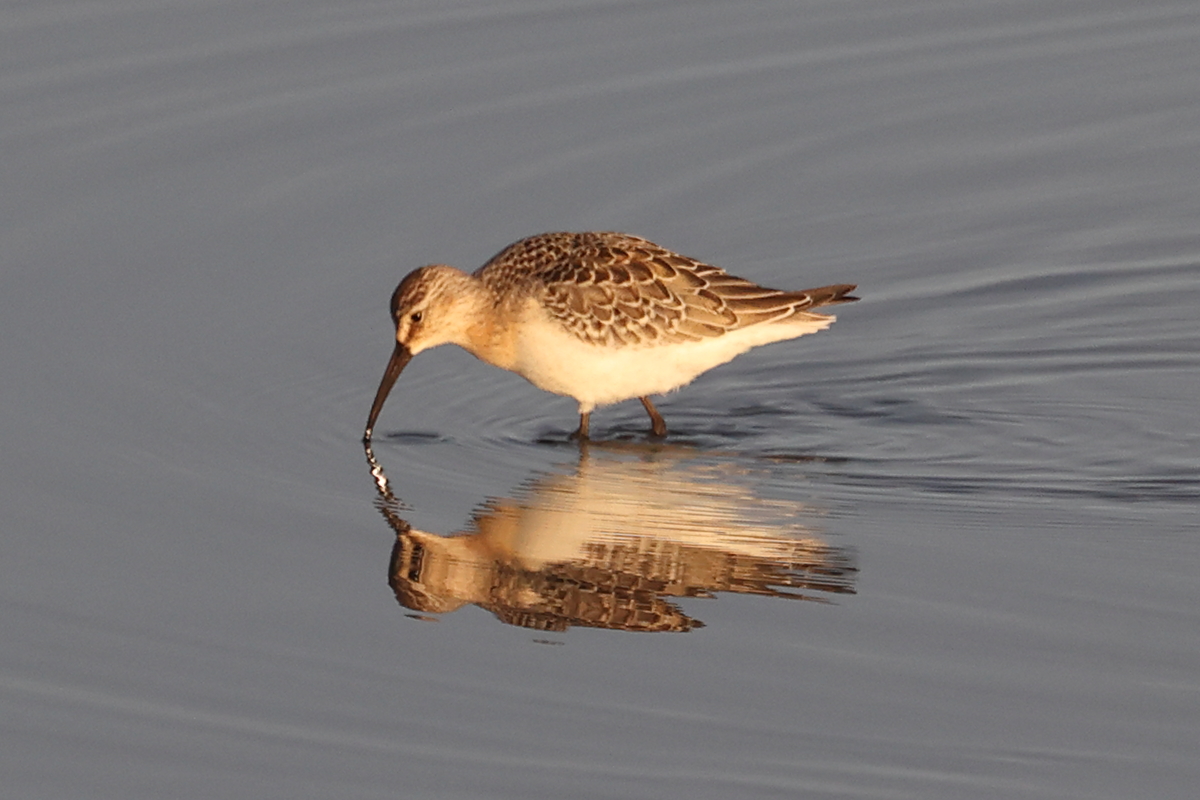
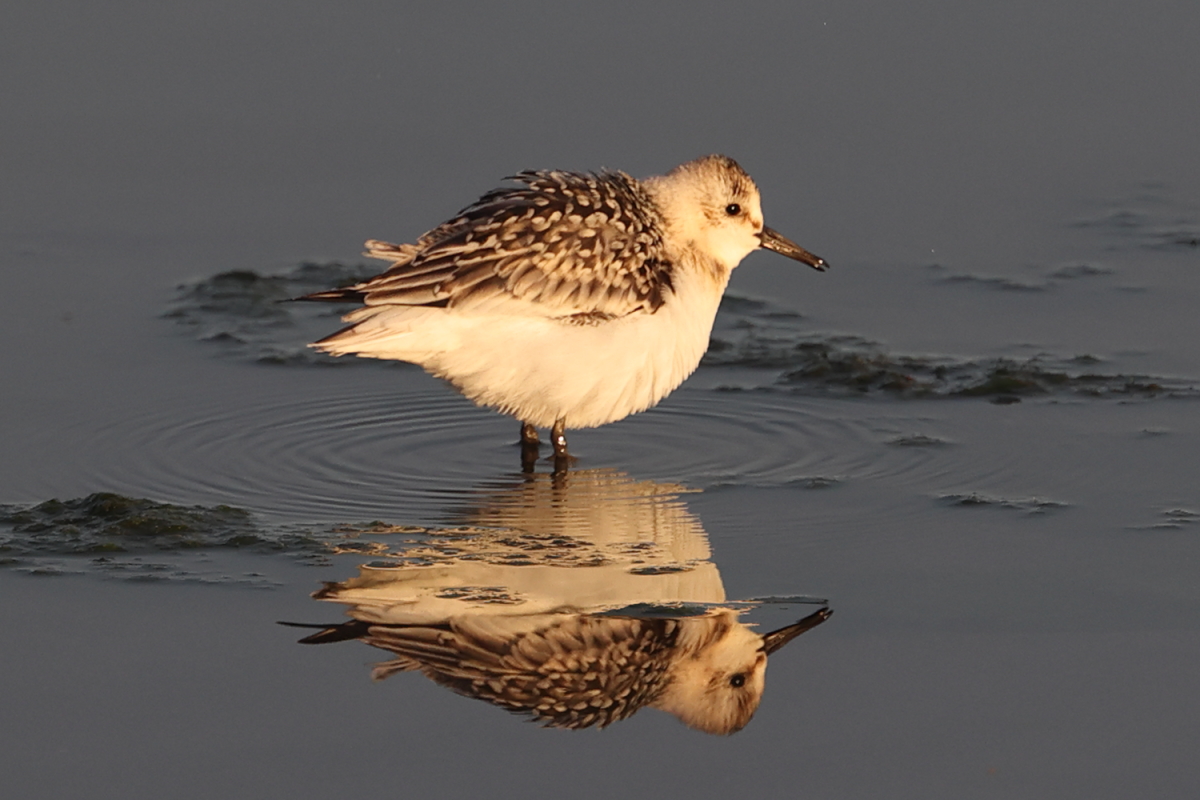
Curlew Sandpiper (above) and Sanderling (below) in evening light, Pool of Virkie, Shetland © Nigel Milbourne 2025
Saturday 27th September
News from Rich. M. of two PECTORAL SANDPIPERS at Top End together with seven Dunlin, 39 Lapwing, a Cetti’s Warbler and two GLOSSY IBISES. Merv P. texted news of four Meadow Pipits, two Ruff, two Dunlin, two Black-tailed Godwits, two GLOSSY IBISES, 37 Lapwings, and five Great White Egrets.
SHETLAND
I took the ferry over to Bressay this morning to do the Parkrun even though the wind was blowing a hooley. It was a very friendly event and I enjoyed tea and cake afterwards in the cafe with fellow participants, three of whom were from New Zealand! We had to move accommodation today so did little or no birding.
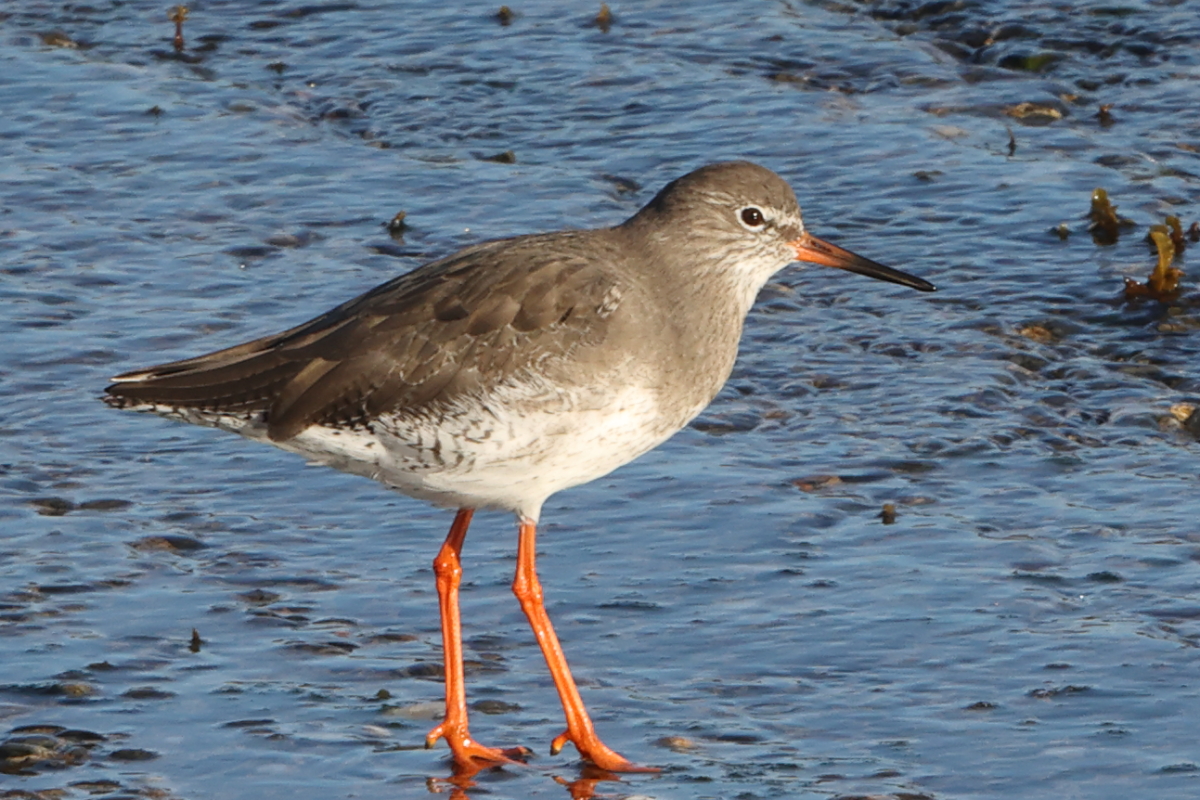
Redshank, Brei Wick, Shetland © Nigel Milbourne 2025
Friday 26th September
No news from the lake.
SHETLAND
The wind got up again today, and it was making it even harder to find birds than the previous few days, which have been hard enough. As Jane H. said, “it’s a bit thin at the moment”. Sid and I took a drive down to the south end of the island and our best bird was a Spotted Flycatcher! Enough said. In the evening I had the pleasure of meeting up with Pete Gulliver who I have done bat work with a few years ago in Somerset. He has been living on Shetland since 2019, so we had much to talk about over an excellent meal. Great to catch up Pete – thanks.
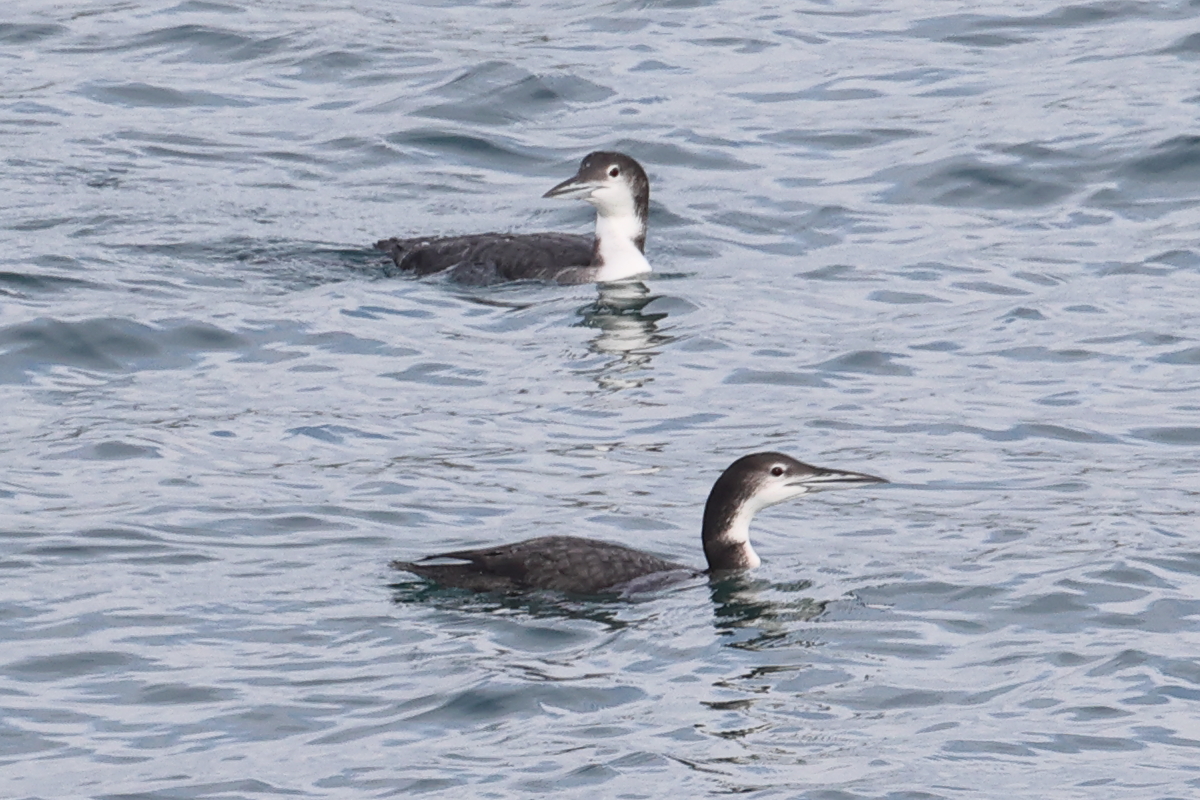
Great Northern Divers, Bay of Quendale, Shetland © Nigel Milbourne 2025
Thursday 25th September
News from Andy D. today of 22 GLOSSY IBISES, four Black-tailed Godwits and a Redshank at Blagdon. Avon Birds also reported a Dunlin, a Skylark (over), a Cetti’s Warbler in song, and 15 Meadow Pipits. Blagdon resident, Claire G., sent me the following message too: “In house… looking east towards Ubley: murmuration for last 30 mins. Binoculars can’t pick them up but assume are starlings – moving like smoke, never seen one live before”. Claire you are probably right, as we do have a Starling roost each autumn in one or other of the reedbeds either side of the Fishing Lodge, but we also have large numbers of corvids (Jackdaws and Rooks) that gather at the lake each evening, especially in winter, so could conceivably be them if not Starlings. Thanks for your news.
SHETLAND
It was another grim day with no birds on the islands to speak of. We headed up north to bird Sullom plantation, but all I saw was a Goldcrest, a Blackbird and a Robin. As we drove away from there, news came in of a Semi-P at Melby, a long drive, but we decided to go. When we got there it transpired that it hadn’t been seen since the initial sighting. We watched a few Sanderling etc. on the beach, then a mega broke – there was a Black Scoter not far from where we’d just come from! It was a world tick for Chris, so we turned around and drove back, only to find that it was actually a drake Common Scoter. We headed to Frankie’s in Brae, for a sit-down fish supper, before heading back to Lerwick and Cunningsburgh. I’d driven over 160 miles and hadn’t left the Mainland. And there was me thinking Blagdon had been slow this year…
Wednesday 24th September
News from Mike M. of 24 GLOSSY IBISES at Top End, plus 12 Lapwings, and a Black-tailed Godwit. Thanks Mike – it sounds as slow down there as it is up here!
SHETLAND
It was another mild and, mainly, sunny day with a strong southerly breeze. We heard this morning that the Risso’s Dolphin had moved down the west side of Mainland away from Scalloway. Hopefully, it might survive the problems it was in yesterday. The birding is beginning to pick up, but very slowly. We saw a Pied Flycatcher, Reed Warbler and Lesser Whitethroat at Quendale… but it’s still tough going! However, the weather is set to change on Friday through Saturday, and conditions are hopefully looking good for some migrants to drop in. I’m hoping to do the Bressay Parkrun on Saturday morning, unfortunately when 45 mph winds are forecast – it won’t matter, I’m not chasing a time, I’m just hoping to be able to take part in the most northerly Parkrun in the UK while I’m here. They’re hardy folk up here, so I hope it isn’t cancelled.
Tuesday 23rd September
SHETLAND
We had hoped to go north today to Yell and Unst, but the ferries were either fully booked or running at the wrong time for us to get there and back. We tried to book for Wednesday too and still couldn’t get on them. We’ve never had this before. So, we went to Scalloway to see a Risso’s Dolphin that had been reported in the marina. We spent an hour or two watching it at very close range near Trondra bridge and the thrill of spending time with it gradually turned to sadness as we became aware it was entangled in fishing net monofilament. We passed the information on to the local cetacean group in the hope that they might be able to help it. The birding remains extremely quiet on Mainland.
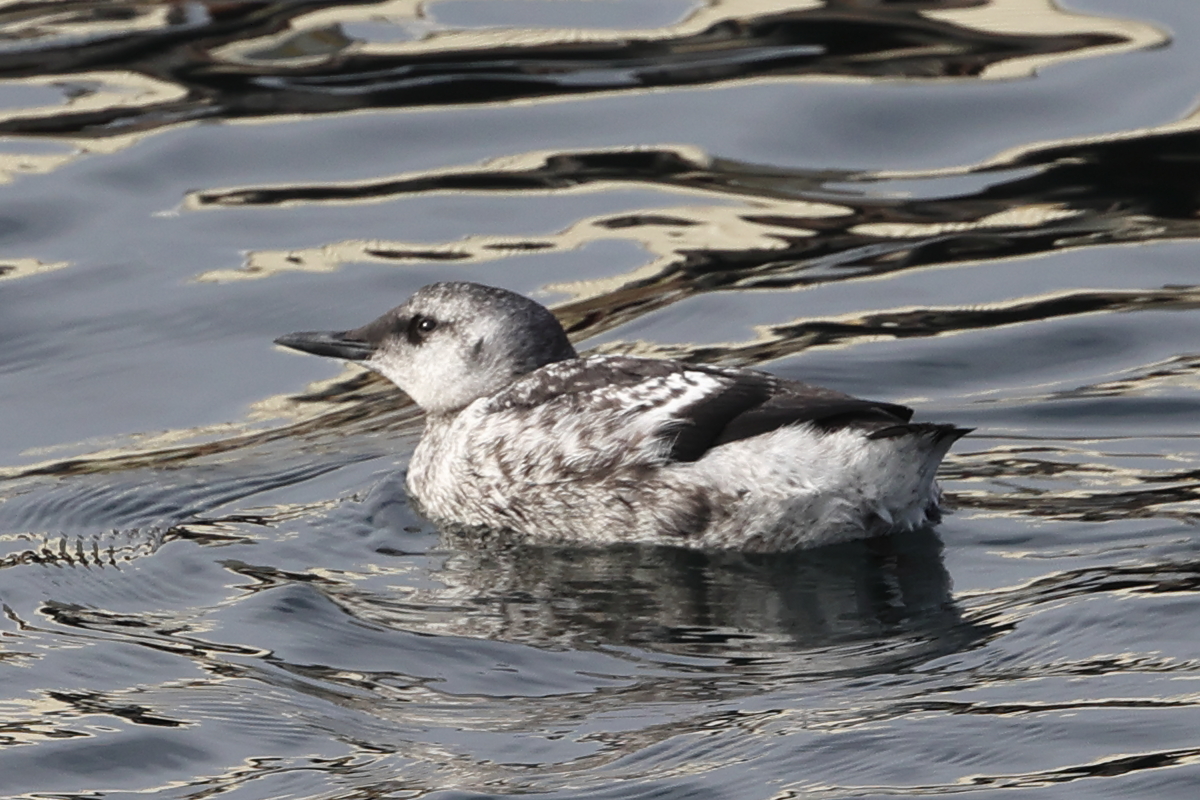
Black Guillemot, Scalloway Harbour, Shetland © Nigel Milbourne 2025
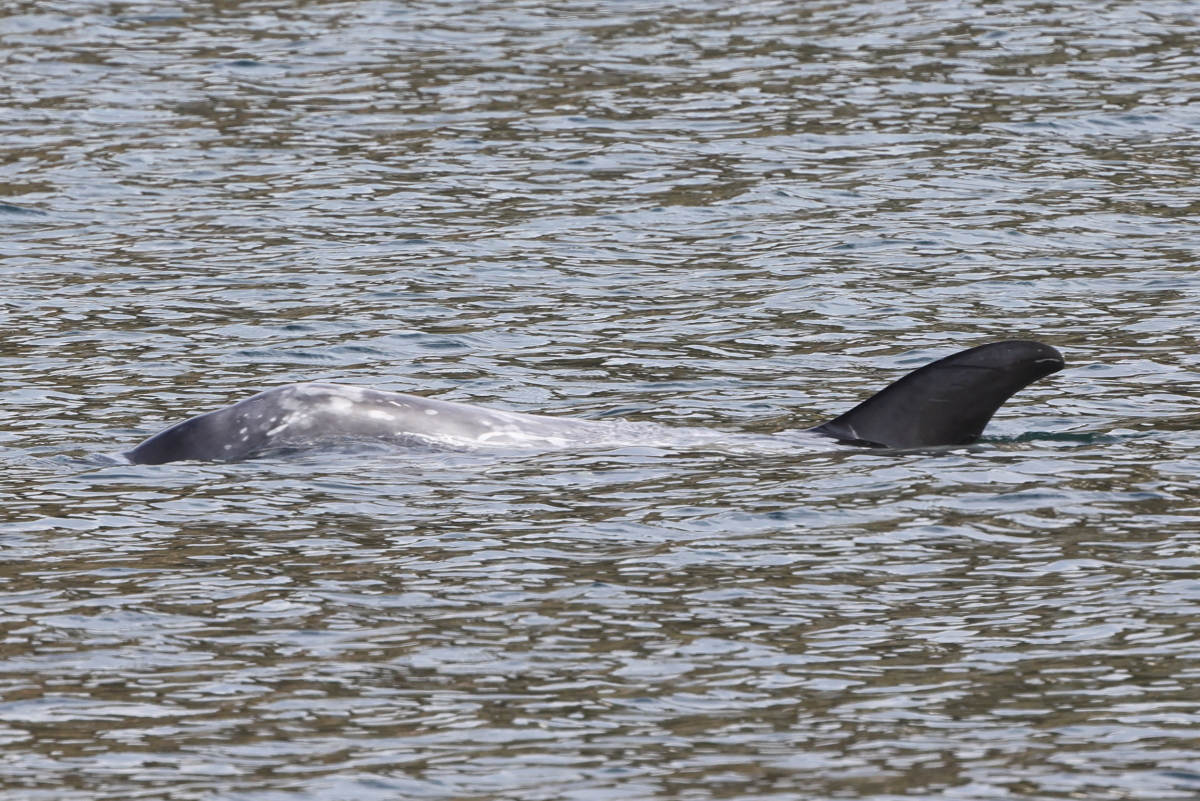
Risso’s Dolphin, Scalloway, Shetland © Nigel Milbourne 2025
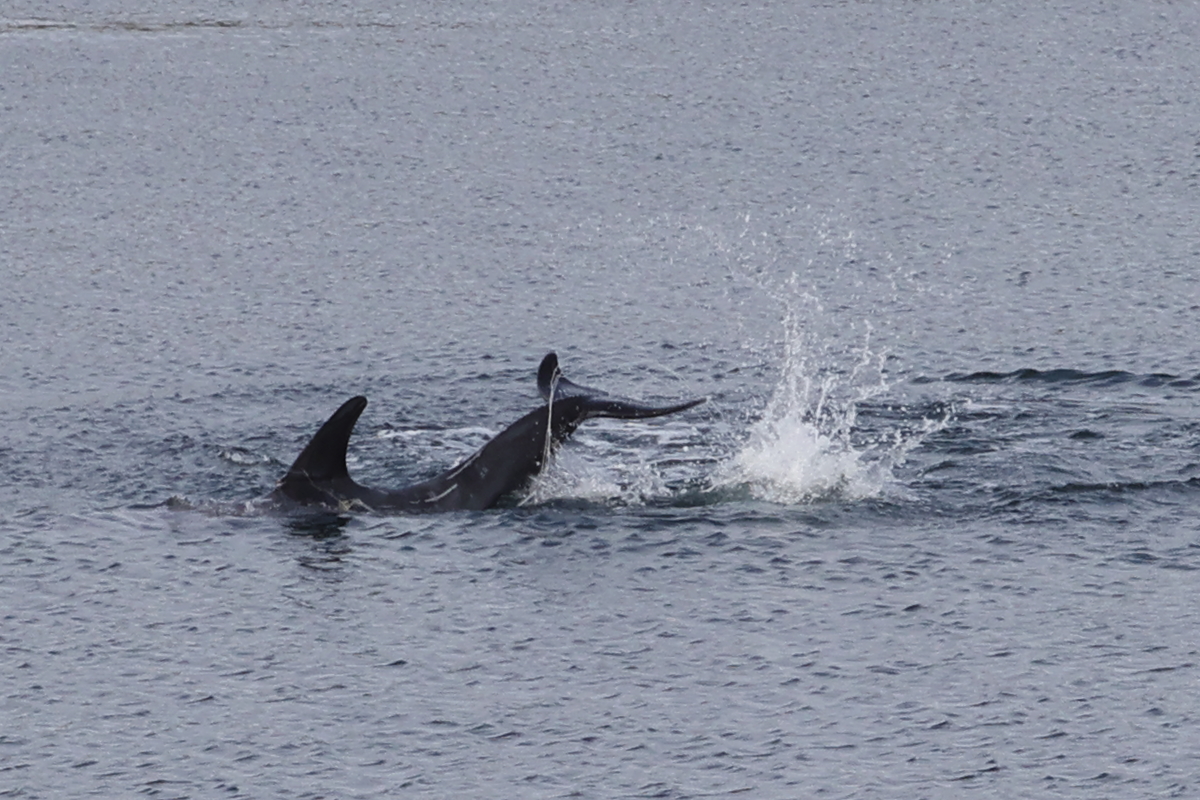
Risso’s Dolphin, Scalloway, Shetland © Nigel Milbourne 2025
Fishing gear was tangled around the tail fluke.
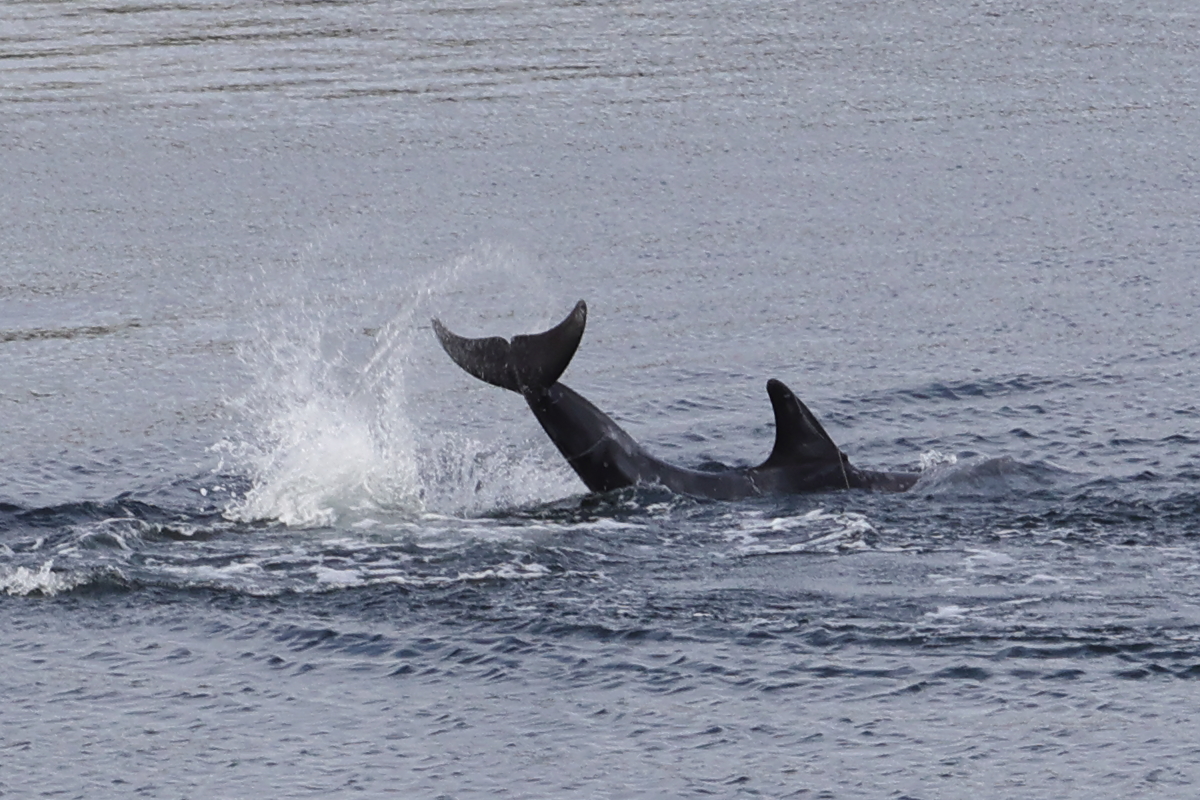
Risso’s Dolphin, Scalloway, Shetland © Nigel Milbourne 2025
It looked like the fishing gear around the tail fluke was thrown off in this shot.
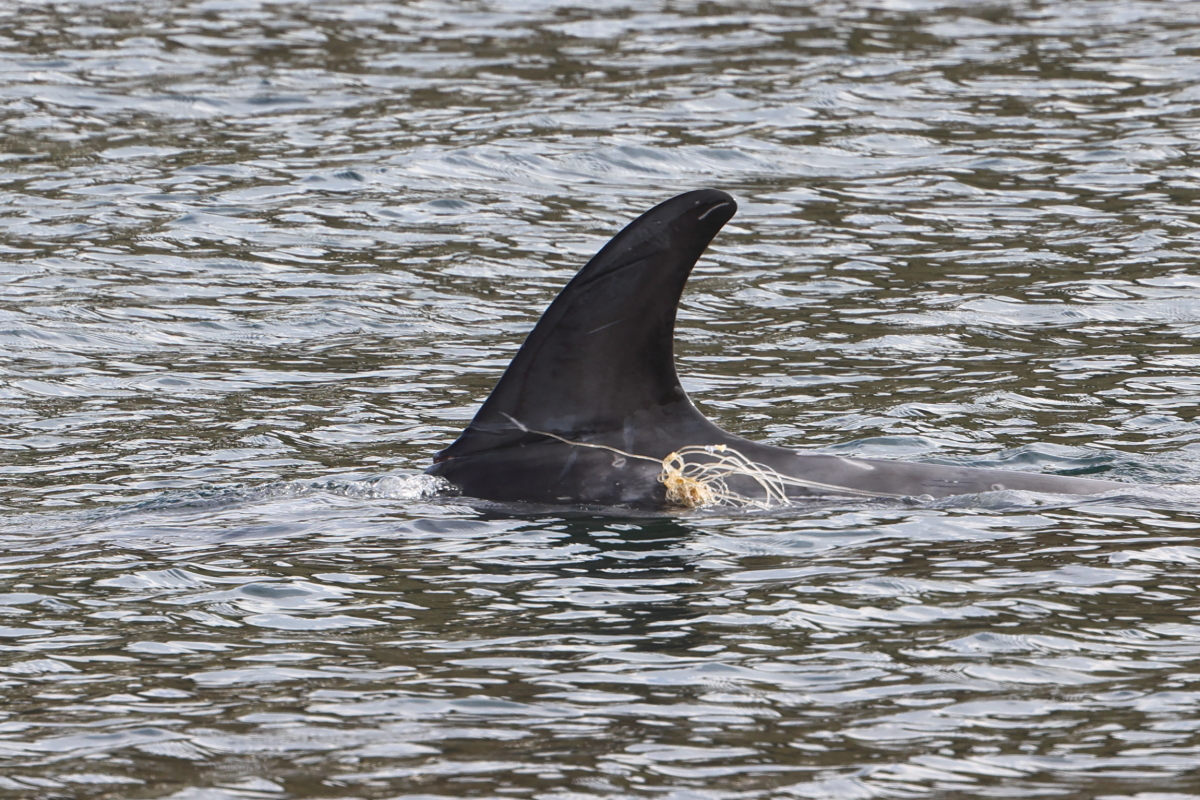
Risso’s Dolphin, Scalloway, Shetland © Nigel Milbourne 2025
Monofilament was tangled on the dorsal fin and causing injury.
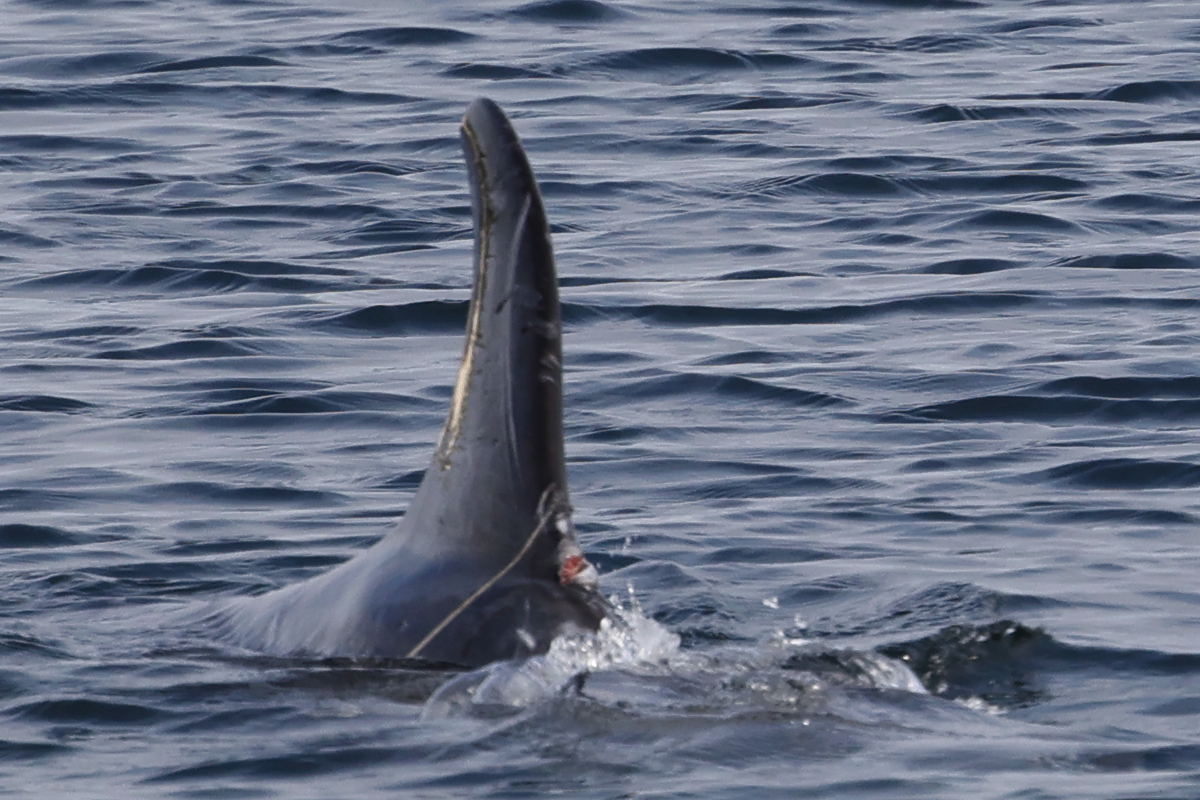
Risso’s Dolphin, Scalloway, Shetland © Nigel Milbourne 2025
Injury presumably caused by the fishing gear.
Monday 22nd September
News from Mervyn P. of 21 GLOSSY IBISES, nine Lapwings, and 2 Dunlin at the lake. Cheers, Merv.
SHETLAND
Today we did a little birding, but it was wet, windy, and not much fun. One of the main reasons for coming to Shetland was to join Matt W., son of our birding mate Jack Willmott, who died last year. There was a small gathering of Shetland birders who’d become friends with Jack over the years, and the four of us who’d gone north to be there when Matt spread some of his ashes at Quendale Mill, one of Jacks favourite places to bird on Shetland. Matt and Sid said a few words, and after scattering the ashes most of us went for a meal together in Lerwick. It was a very moving way to remember a good mate with whom I’d travelled to many places in the UK, and the world, and shared many happy times together. RIP Jack.
Sunday 21st September
News from Mike Moxon today of an Osprey that flew through and circled high off south, 27 GLOSSY IBISES at Top End, five Lapwings, three Dunlin and a Black-tailed Godwit.
SHETLAND
We met with Matt W. at Hoswick this morning and he showed us what he is doing with the RSPB and farmers to try and stop the decline in Twite numbers by planting crops to provide them with supplementary food sources to help get the first year birds through their first winter, which is thought to be the main cause of the population decline. The benefit to the farmers are that the tired, sown grassland, gets a better soil structure on which to grow and produce food for the animals. From Hoswick, where we saw a couple of White Wagtails and three Siskins, we drove down to Sumburgh Head. There was a Snow Bunting there, that I didn’t see, but also lots of Meadow Pipits and Skylarks. After that, Matt, Mark and Chris decided to drive an hour and a half back north to North Roe to try for the Arctic Redpoll again. Sid and I decided to bumble about at the south end of the island where we saw the Red Kite, Whooper Swans, over 20 Wheatears and a selection of waders that included Bar-tailed Godwit, Dunlin, and Ringed Plover. It is quite slow up here at the moment, but it was nice to meet up with Pete and Wendy T. though.
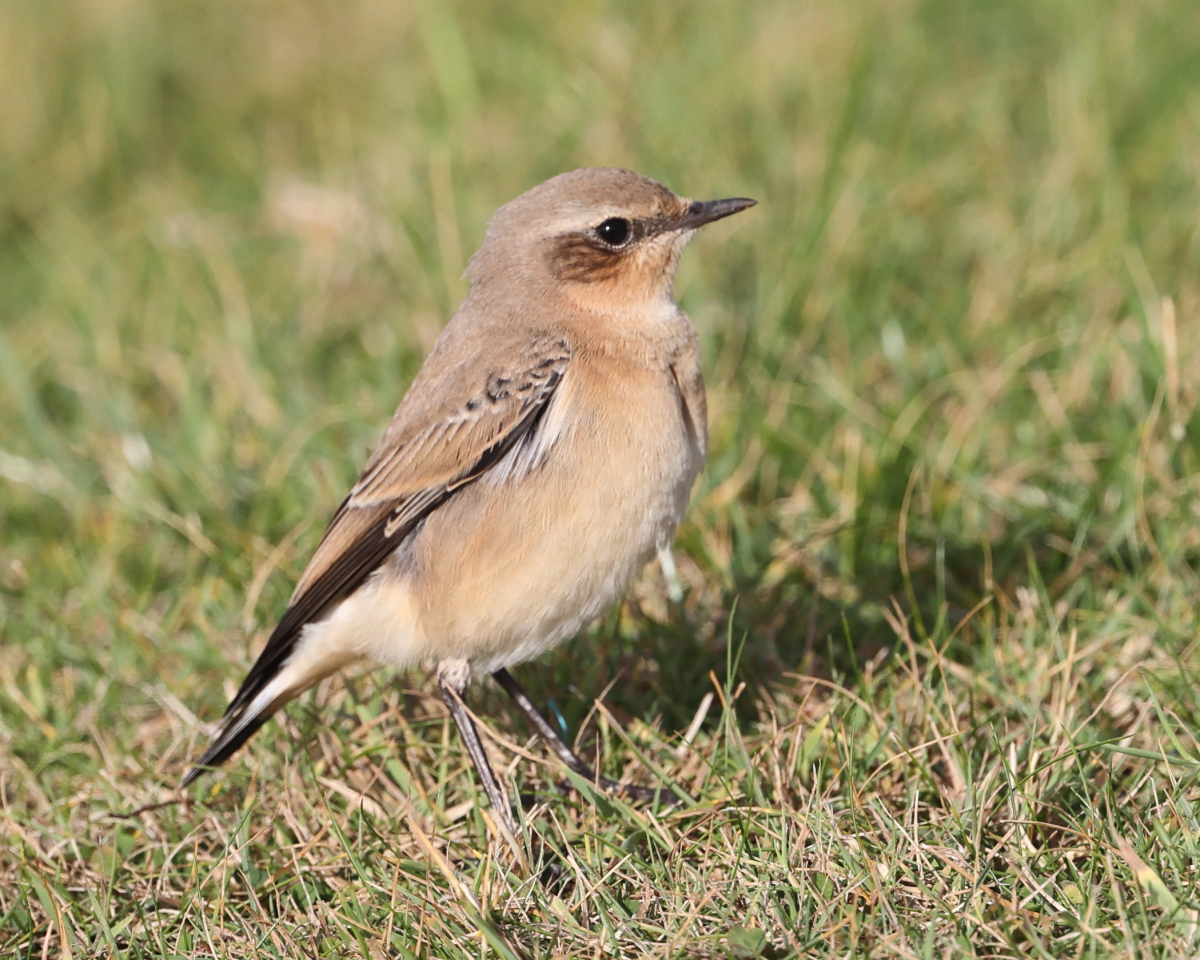
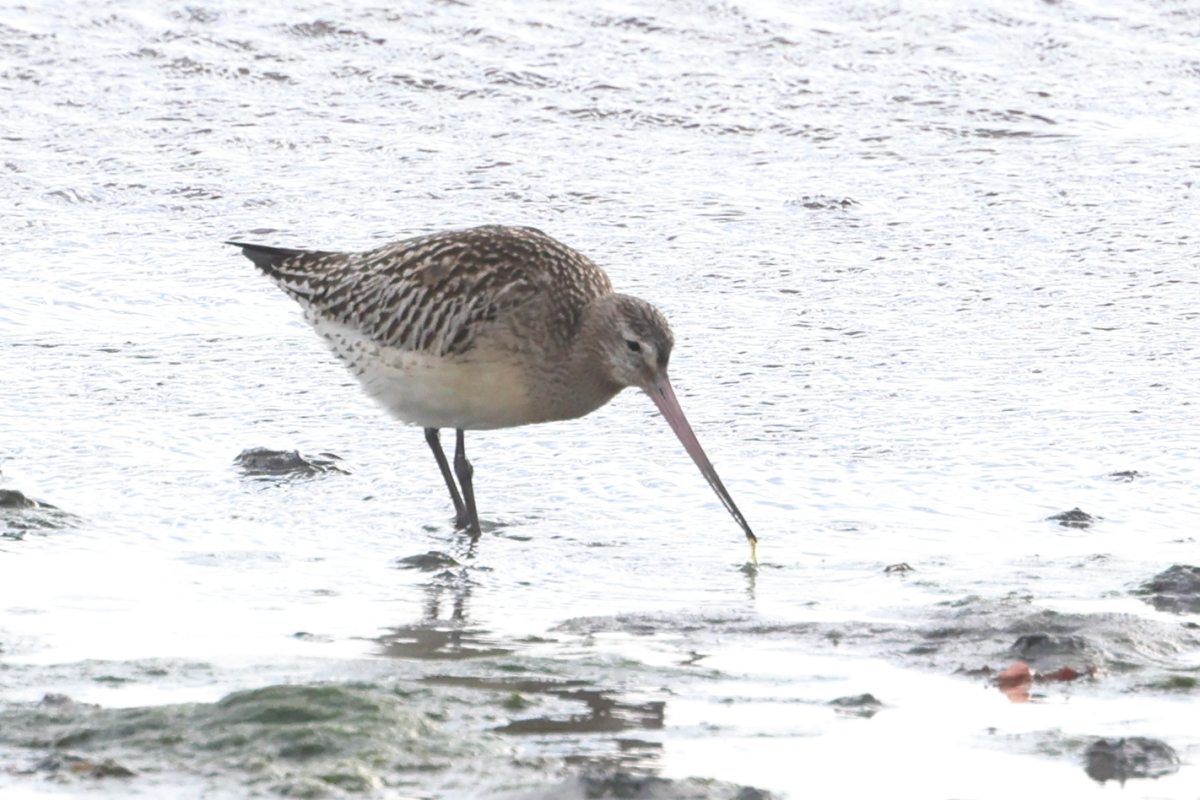
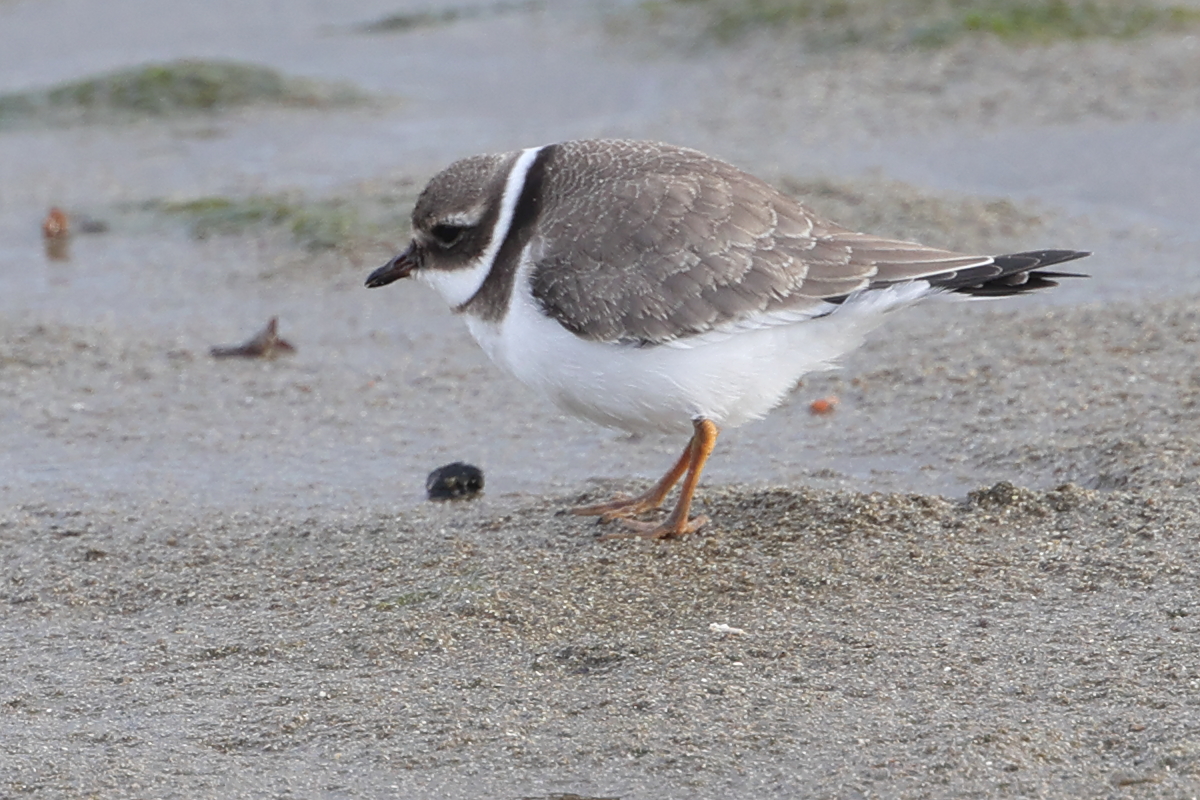
Wheatear, Bar-tailed Godwit and Ringed Plover, Pool of Virkie, Shetland © Nigel Milbourne 2025
Saturday 20th September
No news from Blagdon today.
SHETLAND
After a smooth crossing, we disembarked and had some breakfast in Lerwick before popping over to Loch of Tingwall to see a drake Ring-necked Duck. A call to say some Orcas were around Sumburgh Head saw us head south to look for them (unsuccessfully), before heading to North Roe hoping to see a Hornemann’s Arctic Redpoll, which we also dipped. A bit of a mixed start to the holiday.
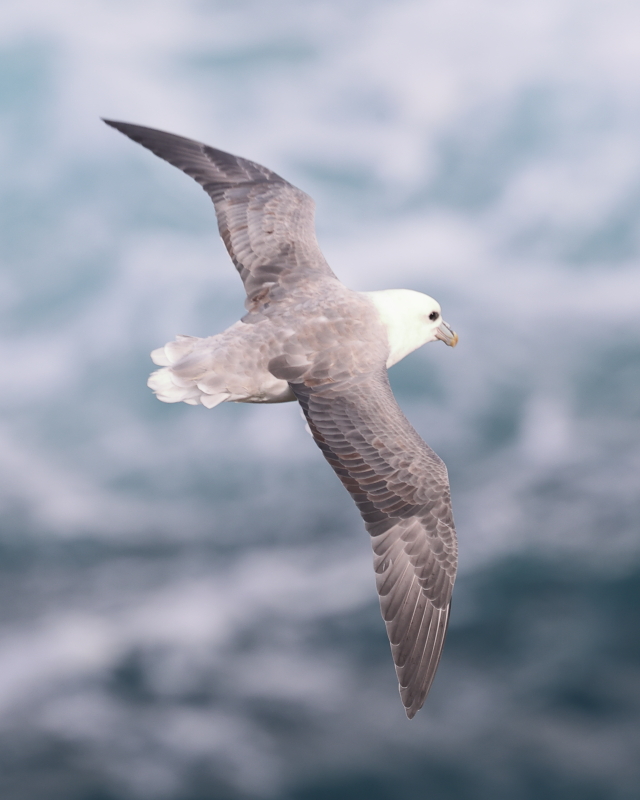
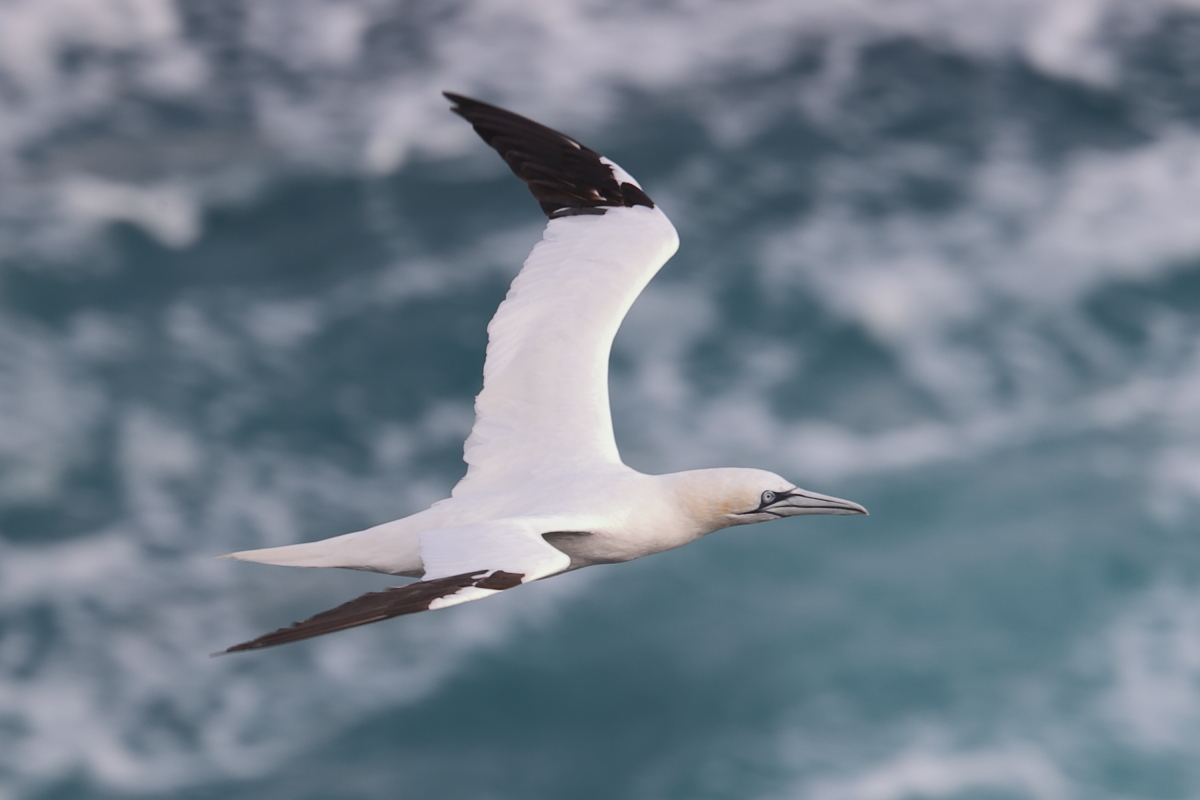
Fulmar (above) & Gannet (below), Sumburgh Head, Shetland © Nigel Milbourne 2025
Friday 19th September
News from Rich M. who reported: 24 GLOSSY IBISES, three Ruff and a Black-tailed Godwit at Top End, and two Egyptian Geese distantly along the North Shore.
SHETLAND
I drove Sid and I north towards Aberdeen today and stopped at Lunan Bay near Montrose, where we met with Mark P. and Chris to look for White-winged Scoter. We certainly saw Common and Velvet Scoters, but at the distance we saw the birds we couldn’t really be sure of having seen any White-winged Scoter. There was a good flock of Red-breasted Mergansers in the bay, and lots of terns, Gannets, Fulmars, and an Arctic Skua harrying the terns. After boarding the overnight ferry to Shetland we birded until dusk, and saw four Sooty Shearwaters, together with Gannets, Fulmars and Kittiwakes, plus another Arctic Skua.
Thursday 18th September
No news from Blagdon today.
SHETLAND
I drove to East Lothian today and went straight to Musselburgh Lagoons with Sid, and met my sister to see the Marsh Sandpiper. It was showing very well at quite short range, and had a supporting cast of Ruff, Dunlin, Curlew Sandpiper, Spotted Redshank, Redshank, Little Stint, Lapwing and a Curlew. My sister is learning to use her telephoto lens to take some bird photos and got this picture of the Marsh Sandpiper. Nice one sis.
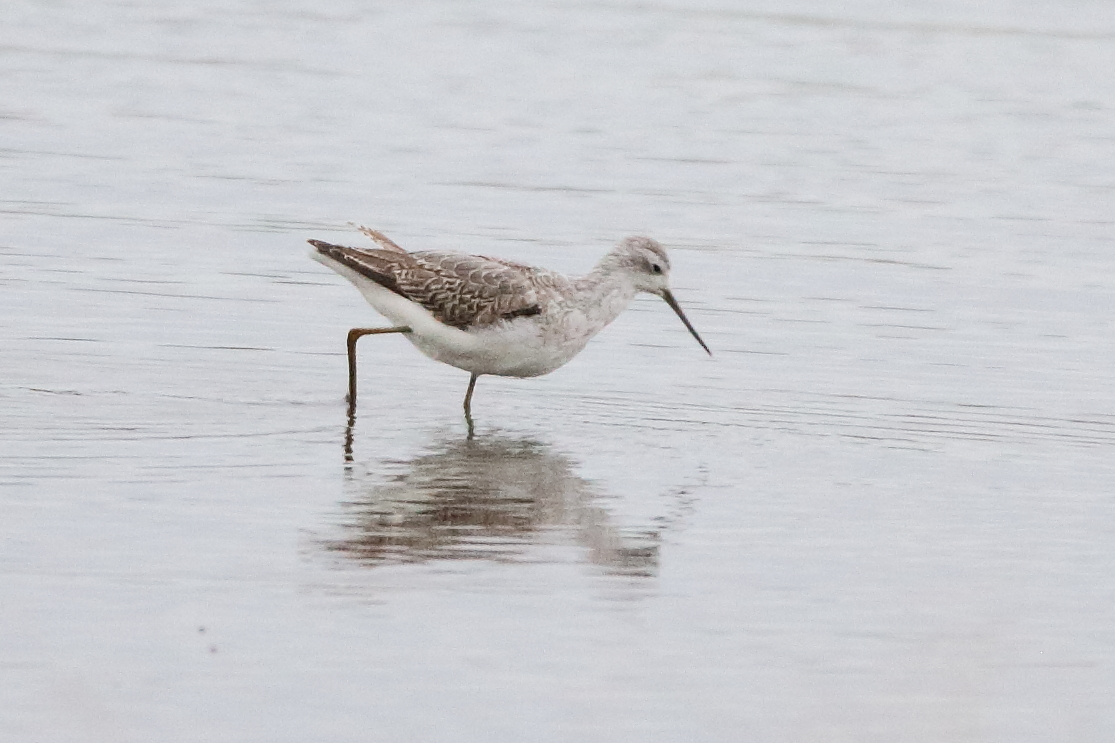
Marsh Sandpiper, Musselburgh Lagoons, Scotland © Ruth Al-sadie 2025
Wednesday 17th September [Overcast & mild. Dry.]
This morning I took the opportunity for a look around before I head off to Shetland tomorrow, with an overnight near Edinburgh to give us a chance of seeing the Marsh Sandpiper at Musselburgh Lagoons. I saw 22 GLOSSY IBISES, two Common Sandpipers, a Wood Sandpiper, a Greenshank, three Ruff, a Redshank, five Egyptian Geese, three Great White Egrets and a Little Egret, of note. The water level continues to creep up and waterfowl seem to be leaving the lake, so numbers are really low for the time of year.
Tuesday 16th September [Sunny spells]
After last nights wet and windy weather, I decided to go to the lake this morning to see what might have blown in. As it happens no sea birds were to be found (unlike Cheddar Res. where there were three Grey Phalaropes reported), just the usual gulls and Cormorants. Nevertheless, I saw seven Common Sandpipers, five Ruff, four Dunlin, two Greenshank, two Lapwings, two juvenile Little Ringed Plovers, a Ringed Plover, and a Black-tailed Godwit. I counted 25 GLOSSY IBISES at Top End, but had already seen eight fly in and land on Home Bay Point beforehand. However, they disappeared before I drove to Top End, either from the lake or back to Top End, so I’m not sure if there were 33 or 25 present. I met Martin Kerly later, and he’d counted 29 earlier in the morning but wasn’t sure if he’d double-counted any, as they were quite mobile, although he counted in one sweep. Perhaps, there were 33 after all, but we can’t be sure. Other counts included four Egyptian Geese, two Little Egrets and three Great White Egrets, plus a fly-past Kingfisher at the Lodge. 49 spp. According to Avon Birds a juvenile Black Tern was also seen at the lake today.
Monday 15th September [Sunshine & heavy downpours]
I had an hour over lunchtime to have a look around the lake, and on reaching the dam became immediately aware of a tern flying around off the North Shore. I drove to the Lodge and actually spotted four terns flying around – two close in off the Lodge with the hirundines, and two right out in the teeth of the gale. During a bright sunny spell I felt happy that the two feeding closest to me were Arctics, but I had nagging doubts about the two that continually fed on the far side of the lake. Structurally, I eventually decided they looked more like Commons, so took a load of photos hoping against hope that at least one or two would be in focus and show some detail. Torrential rain started falling but I got some more pictures after it had passed. I went to Top End and counted 32 GLOSSY IBISES, saw six Dunlin (Rich M. counted seven earlier), three Ringed Plovers, and five Ruff. I spent too long trying to get some decent shots of the ibises when the sun shone, and frustratingly had to leave to go to the gym. I fired a few shots off at the dam of the two remaining terns, both of which proved to be Common when I reviewed my pictures in the evening. I guess the Arctics had quickly moved on between the rain storms. I also saw four Egyptian Geese, a Common Sandpiper, a Great White Egret and a Little Egret. 37 spp.
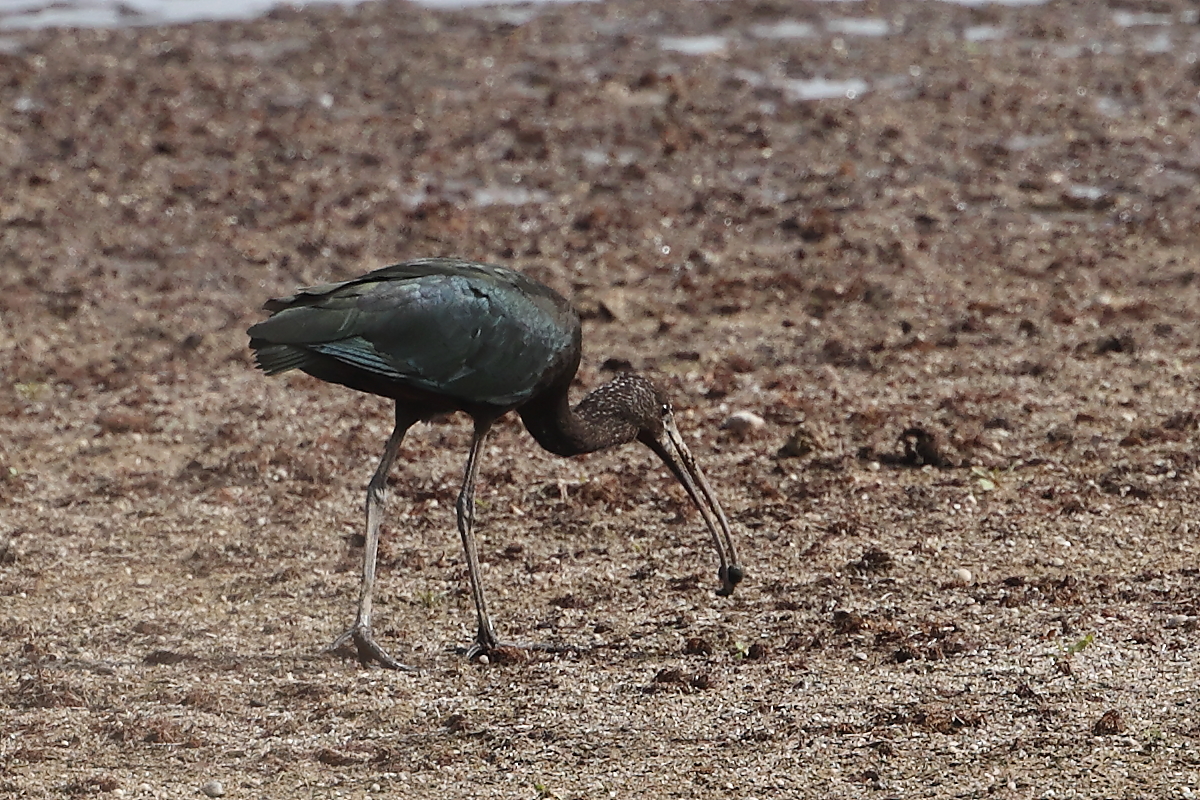
Glossy Ibis, Wood Bay, Blagdon Lake © Nigel Milbourne 2025
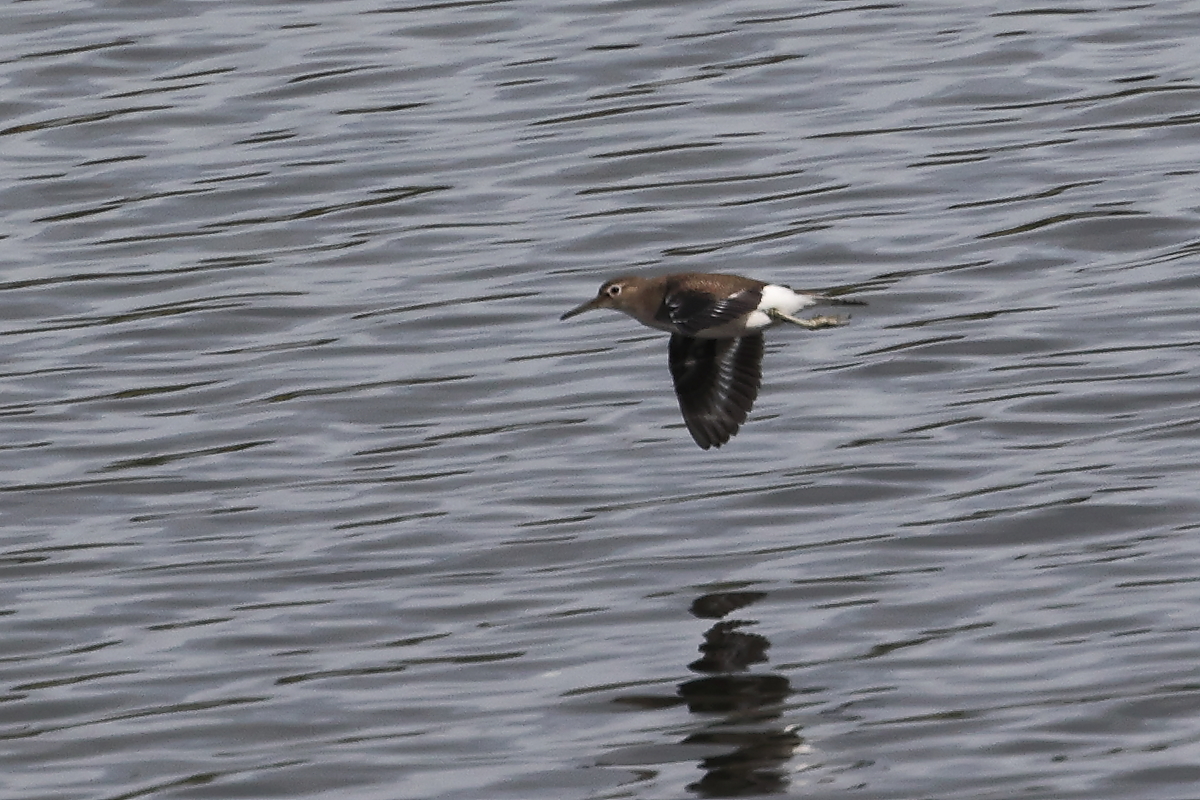
Common Sandpiper, Dam, Blagdon Lake © Nigel Milbourne 2025
Sunday 14th September [A bit of a grim, wet, day.]
More rain today, and I grabbed an hour at the lake late in the afternoon between showers. Despite the wet week we’ve had, there hasn’t been too much movement in the lake level, although it is edging back up. This afternoon, I counted 30, quite mobile, GLOSSY IBISES at Top End, but couldn’t see any waders at all there, or during my slow drive along the south side. I spotted just two Great White Egrets. Something, that I didn’t manage to see, was causing quite a bit of disturbance among the wildfowl and gulls. There were hundreds of all three common hirundines feeding over the water in sheltered bays. As I made my way out of the Lodge gate, the heavens opened again, so I didn’t bother with a close check over the dam, although I’d looked along it from Green Lawn. Wind and more rain is due overnight, so an early morning visit might be in order. 29 spp.
Saturday 13th September [Mainly sunny with a few showers]
A trip down to the lake in the sunshine this afternoon saw a new record count of 31 GLOSSY IBISES at Top End. The five Ruff and three Lapwing were still present, and at the Fishing Lodge I saw 26 Ringed Plovers, and a Common Sandpiper on the dam. I couldn’t spot the Teal with the white neck ring but I didn’t check all of those around the lake in the time I had available. 33 spp.
Friday 12th September [Heavy showers with some prolonged sunshine]
I had quite a good afternoon at the lake this afternoon, although I unfortunately didn’t get to hear about a Spoonbill seen first thing (Andy D.) this morning until it was too late. However, I saw two Common Sandpipers, three Egyptian Geese, a Pintail, three Knot, one of which was in near breeding plumage, five juvenile Ruff (four Reeves), 12 Ringed Plovers, three Lapwings, two Greenshank, two Little Egrets, three Great White Egrets and, in late afternoon, the 24 GLOSSY IBISES had been joined by another three making a new site record count of 27. The large female Peregrine may have moved the Knot on while I went home to collect my camera, because try as hard as I might I couldn’t find them when I got back to the lake, although the Ruff were still there. When I was at the Lodge at lunchtime, a Black Tern flew past through the throng of hirundines – a high proportion of which were Sand Martins. I didn’t see it again, so assume it flew straight out west. Two year ticks, but I’d have loved to have seen that third one! 49 spp.
If you are interested in such things, I noted a Teal with a white neck ring again along Burmah Road today. I saw it for the first time this autumn during the WeBS count on the 11th August. Mark H. found a similar bird (possibly the same individual) on 9th Oct. 2022 and I gave a link to a paper he found about the quite rare phenomenon. See: The white neck-ring of the Eurasian Teal Anas crecca: rare mutation or stable morph? A first genetic and heuristic analysis.
Thursday 11th September [Heavy showers & windy]
I spent an hour and a half over lunchtime at the lake today. The 24 GLOSSY IBISES were still feeding at Top End, and there were two Greenshank and three Black-tailed Godwits there too. Two more Greenshank were feeding along the North Shore between Orchard Bay and Ash Tree, and I could see three Lapwings in the vegetation growing on the lake bed at Burmah Road. Four Egyptian Geese were on the dam wall, and I noted five Little Egrets and four Great White Egrets around the lake. Despite the heavy rain showers, there were still a few butterflies on the wing when the sun came out; I saw two Common Blues and several Speckled Woods. 39 spp.
Wednesday 10th September [Rain for most of the day – autumn is very definitely here!]
I got to the lake just before 1900 hrs and didn’t stay for long in the miserable weather. There appeared to have been a bit of a clear out, with a Greenshank the only wader that I saw. The 24 GLOSSY IBISES were feeding hard at Top End still, and the only interesting sighting was a Raven gliding around over the loafing gulls at The Lodge causing absolute panic, even the Great Black-backed gulls were freaking out. Strange. 33 spp.
Tuesday 9th September [Grey, with blustery showers.]
I spent a few hours at the lake this afternoon, hoping to photograph the 24 GLOSSY IBISES that were feeding at Top End. Annoyingly, they kept themselves against the far bank and too far away to get any decent shots. Also present were seven Lapwings, three Black-tailed Godwits, five Greenshank, six Little Egrets and eight Great White Egrets. 40 spp.
Monday 8th September [Dry for the morning with a thunderstorm in the afternoon. Clearing later.]
Phil, Rob and I did the WeBS count this morning and welcomed ecologist Poppy M. along to see what it’s all about. It took rather longer than it should have done (0950-1324hrs), given the low number of birds for the time of year. The water level was probably under 40%, which I’ll try and confirm with BW, and the count was: Canada Goose 96, Mute Swan 44 (inc. 3 juvs.), Egyptian Goose 4, Shoveler 56, Gadwall 129, Wigeon 17, Mallard 156, Teal 120, Tufted Duck 53, Moorhen 33, Coot 434, Little Grebe 37, Great Crested Grebe 33, Ringed Plover 16, Lapwing 8, Black-tailed Godwit 1, Common Sandpiper 12, Greenshank 8, Black-headed Gull c.180, Herring Gull 26, Great Black-backed Gull 12, Lesser Black-backed Gull 15, Cormorant 10, GLOSSY IBIS 24, Little Egret 6, Great White Egret 8, Cattle Egret 2, Grey Heron 25, Buzzard 4, Hobby 1, and Grey Wagtail 2. The Glossy Ibis count was a record for the lake, but was part of a much wider influx into the country over the last few days, including 72 at t’other place today! Sadly, the Osprey has moved on – a day earlier than last year, if it is indeed the same bird. I didn’t record much else of note during the count, apart from a Small Copper butterfly, Speckled Wood, Painted Lady and lots of White’s. I also noted Migrant Hawkers, and a few blue damselflies that I didn’t ID to species. I went back in the evening and saw the 24 Glossies and eight Greenshanks still feeding at Top End as I left. 47 spp.
Sunday 7th September [A terrific thunderstorm this morning]
I was at the lake from 1225-1352 hrs when things had dried out a bit. I counted five Common Sandpipers (four at the dam one at Burmah Rd.), 13 adult & juv. Ringed Plovers and a juv Little Ringed Plover (Tiny’s Shallow), four Green Sandpipers (Home Bay), a juvenile Ruff (Wood Bay Point), plus 5 Lapwing, two Greenshank and a Black-tailed Godwit (Top End). There had been up to six Curlew Sandpipers and 38 Ringed Plovers reported earlier, but I’m not sure if observers were looking through the Ringed Plovers carefully for LRP, or just making assumptions they were all RP. Anyway, the bulk of the plover flock and all the Curlew Sands had apparently moved on by the time I arrived. The female Osprey was back on her perch at Top End. 47 spp.
Saturday 6th September [Dry and blustery]
There seems to have been quite an influx of Glossy Ibises into the country today including 28 at t’other place. I thought I’d better get down to the lake to see what might have dropped in. I found three Black-tailed Godwits, five Greenshank, six Lapwing and a smaller wader, that was quite difficult to identify given the distance it was away from me. However, it went up on a few occasions due to the Osprey flying in and out of Top End a number of times. While I was deliberating, it came in to the near side and I was able to see its finely streaked breast extending down to a clear point. I have decided not to submit the record as being a Pectoral Sandpiper. When Chris P. and Max arrived, they spotted a couple of small plovers on the near bank which we think, on balance, were Ringed Plovers rather than Little Ringed – an adult and juvenile. Other birds included a first Pintail of the autumn, six Great White Egrets, four Little Egrets, four Cattle Egrets, 15 Grey Herons, a Red Kite and a Sparrowhawk. 39 spp.
Friday 5th September [Mainly dry and bright until evening showers came in]
There was a report on Avon BIrds that the Osprey was still present at Top End today, and I also received a message from Paul W. about a flock of 20+ commic terns feeding high over the dam end of the lake for a few minutes late in the morning. I didn’t get to the lake, so missed the terns, but I spent a very interesting and long day with Tim Mackrill (Osprey Leadership Foundation) and Seb Loram (Devon Osprey Partnership) that meant I got home home after 1900 hrs, by which time it was too late to have a look for myself.
I received this from Mike M. later “Osprey was eating on far left branch in evening then returned to the lake and appeared to be dragging it’s legs through the water a couple of times – cleaning up? Also pair of Egyptian geese from dam.” Cheers, Mike.
Thursday 4th September [Mainly dry with the odd shower]
I walked with friends today, but did get to the lake for an hour in the evening. The Osprey was still present, and I counted 11 Black-tailed Godwits, six Lapwings, five Greenshank, and a Common Sandpiper while I was there. These were backed up by a count of eleven Great White Egrets, 18 Liittle Egrets, and two Cattle Egrets. 34 spp. After my quick whizz around the lake, I popped home to feed the bat, which ate well and gave me every indication it was fit and well enough to be released again. So, Ce and I took it back to the airport environs and released it after dark. It did a couple of circuits to get its bearings and flew off strongly I’m relieved to say.
Wednesday 3rd September [Heavy showers]
I went to the lake late morning and managed to dodge the showers for the hour I was there. I saw two Common Sandpipers at the dam, along with three Egyptian Geese. From Rainbow Point I was able to scan the North Shore and Top End and picked out three Greenshanks, 26 Moorhens, six Lapwings, an adult Yellow-legged Gull, 13 Little Egrets, 11 Great White Egrets, the Osprey and three Buzzards. 39 spp. I had a quick visit in the evening but didn’t see anything new before I had call from the airport to go and check a bat that had been caught in one of the lounges. It turned out to be another Brown Long-eared Bat – my second there. After examination, I tried to release it nearby as darkness fell, but it preferred stay in the warm. So, I took it home to roost it overnight and, all being well, I’ll feed it in the morning and again before taking it back to the environs of the airport for release at dusk.
Tuesday 2nd September [Overcast and showery]
Ross F. sent me a message that he’d seen the Osprey at 0700 hrs at Top End. It was still there this afternoon when I had a look around. I also counted two Egyptian Geese, two Wigeon, 12 Teal, a Lapwing, a Spotted Redshank, seven Redshank (Mike M. counted eight Redshank a little later in the afternoon) eight Greenshank, 18 Little Egrets, 14 Great White Egrets, a Cattle Egret and a Peregrine. I saw several hundred Sand Martins at Top End while I was there too. On the way home, I scanned the dam again and saw three Egyptian Geese. In the evening, I went back again and while I was there Ross F. sent me another message to say the Osprey was still at Top End at 1930 hrs. Cheers Ross. 44 spp.
Monday 1st September [Thundery showers]
This morning the female Osprey was still present at Top End, making occasional forays towards the dam for fish. It seemed to be catching small Pike and Perch. Also present were a Common Sandpiper, three Egyptian Geese, four Greenshank, a Spotted Redshank, a Peregrine, six Lapwing and six Wigeon. I didn’t count egrets and herons while I was there. Nice to meet finally meet Mike Moxon who I’ve corresponded with on a number of occasions. 44 spp.