Saturday 31st January
The drake Ring-necked Duck has gone back to Heron’s Green Bay at Chew today it seems, unless, of course, there is one on each lake?
EAST LOTHIAN, SCOTLAND
My sister, Ruth, and I went out with our cameras again today, and headed back to Aberlady Bay Local Nature Reserve (Britain’s first in 1952) because she wanted to try and get some better shots of the two Greenshanks that were there yesterday. We didn’t see the ‘shanks because the tide was pretty high, but did we get lucky, or what…?
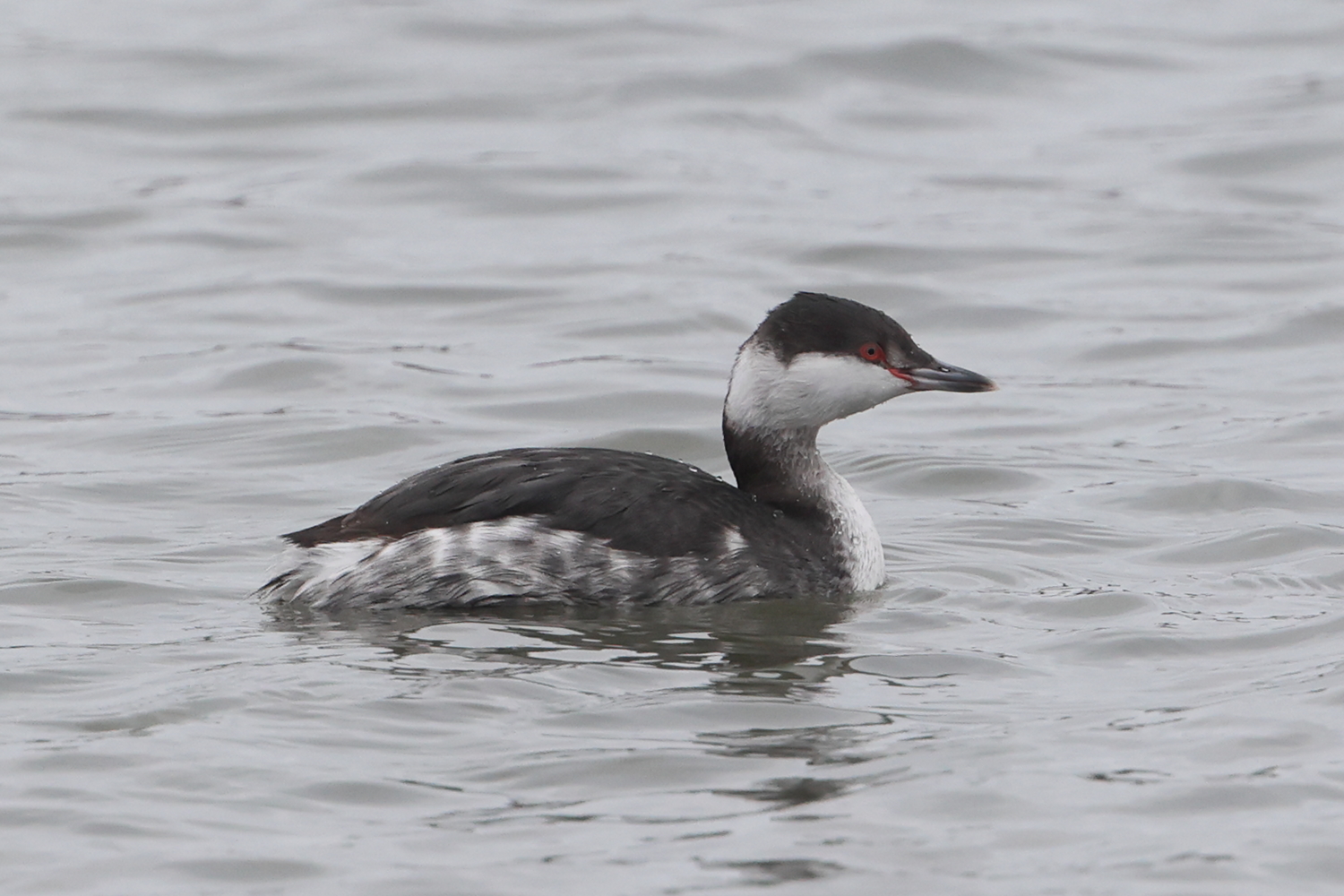

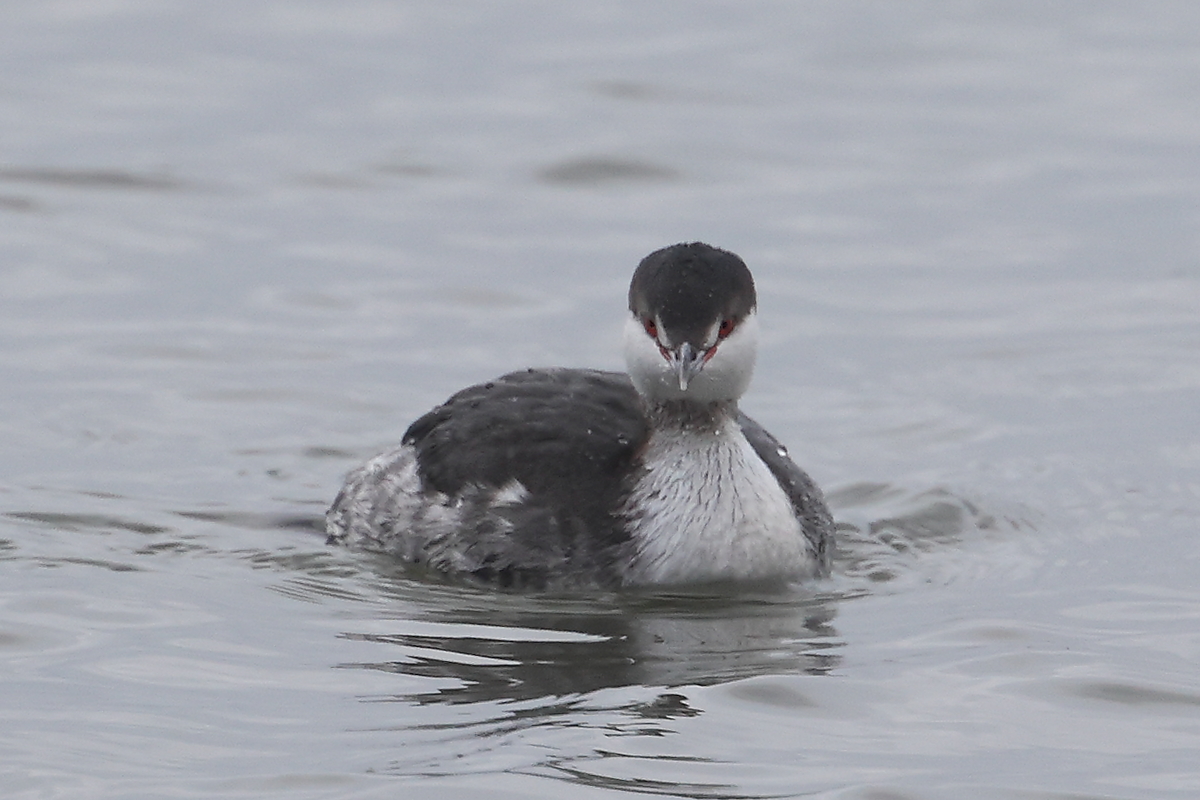
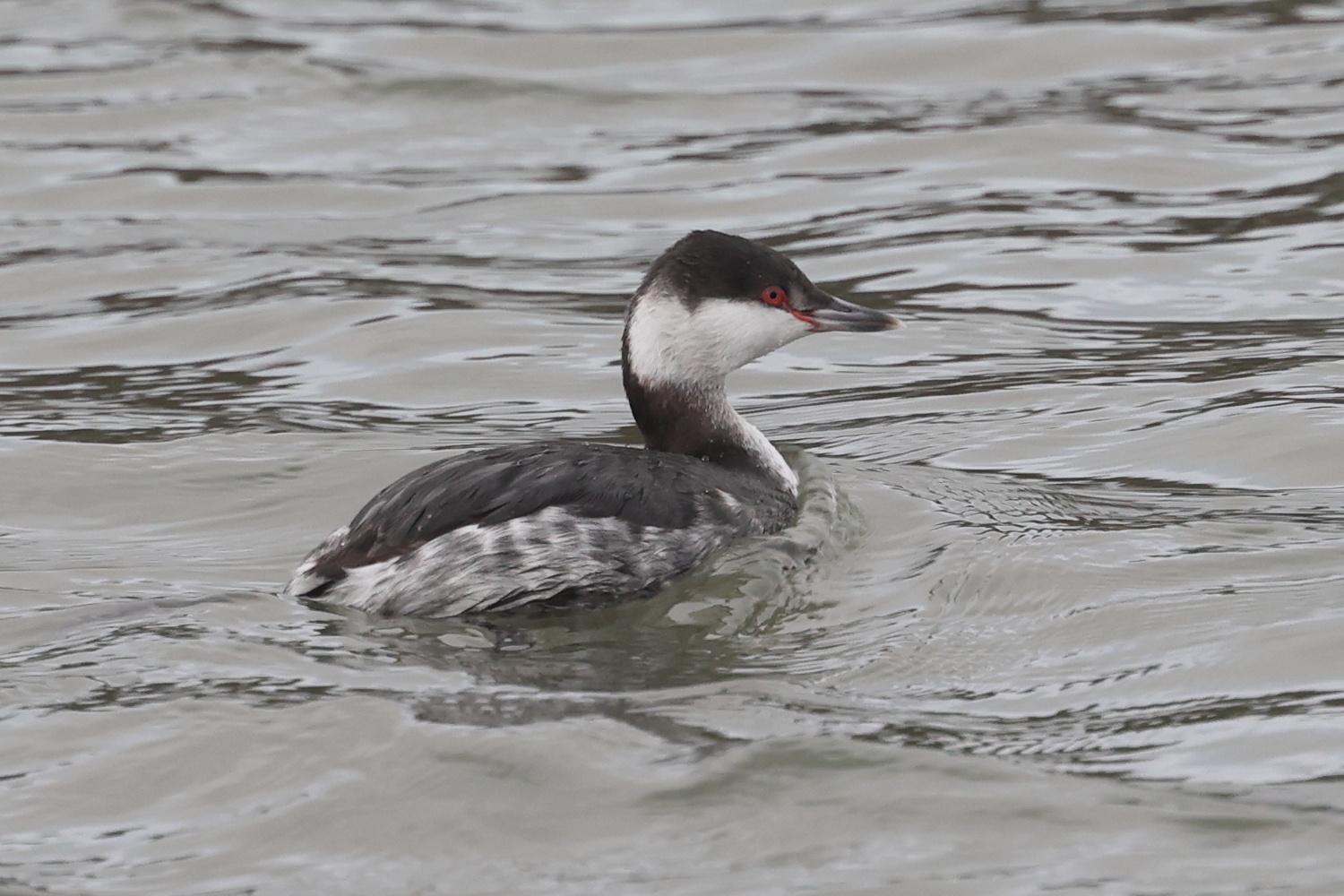
Slavonian Grebe, Aberlady Bay, East Lothian © Nigel Milbourne 2026
Friday 30th January
I understand a drake RING-NECKED DUCK was seen at the lake today by Baz H. At this stage I assume it’s the usual wintering bird that has returned from t’other place – not before time!
Thursday 29th January
I have no news from the lake today.
EAST LOTHIAN, SCOTLAND
Ruth, my sister and I went out with our cameras today, full of good intentions, but frankly, the cold got to both of us while we were at Aberlady Bay. We spent half an hour or so there, before going to Cockenzie House for a bowl of soup and a mug of hot chocolate! I got some close-ups of a Redshank and a more distant series of pictures of a Greenshank that flew in and joined the Redshank before making a short flight upstream just as I retrieved my camera from the car…
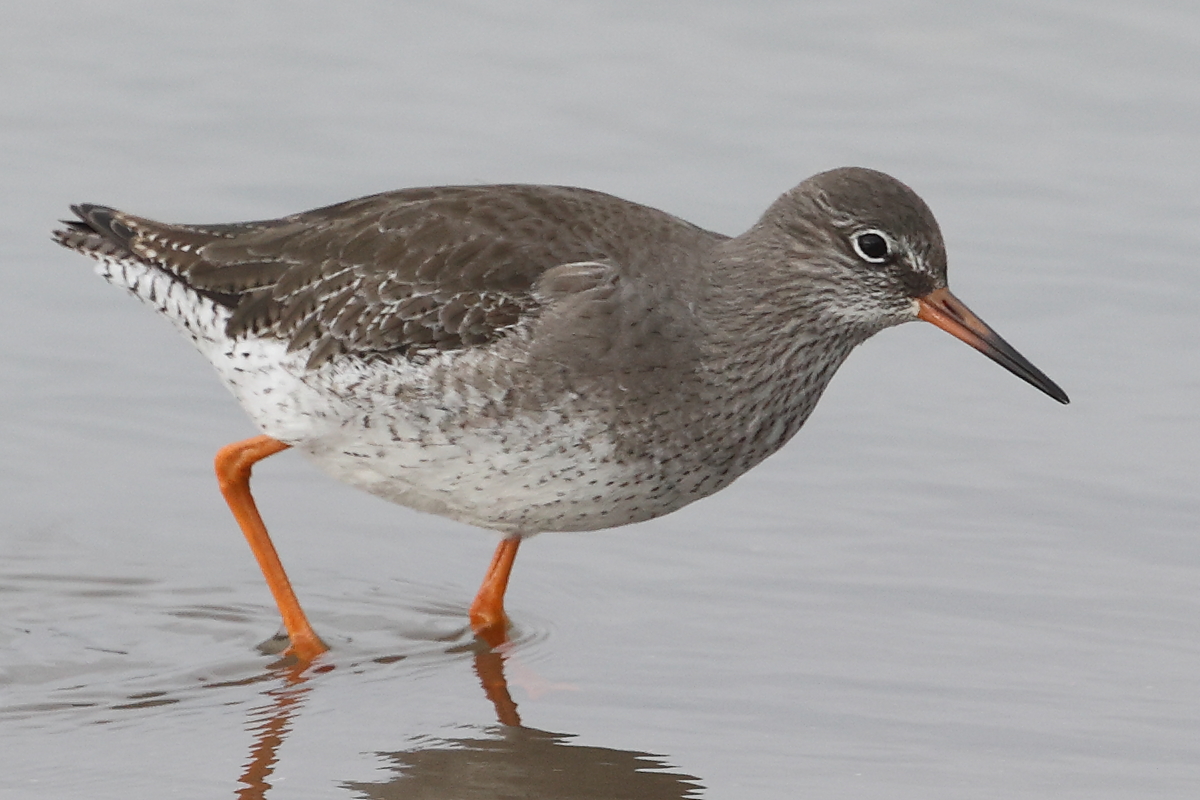
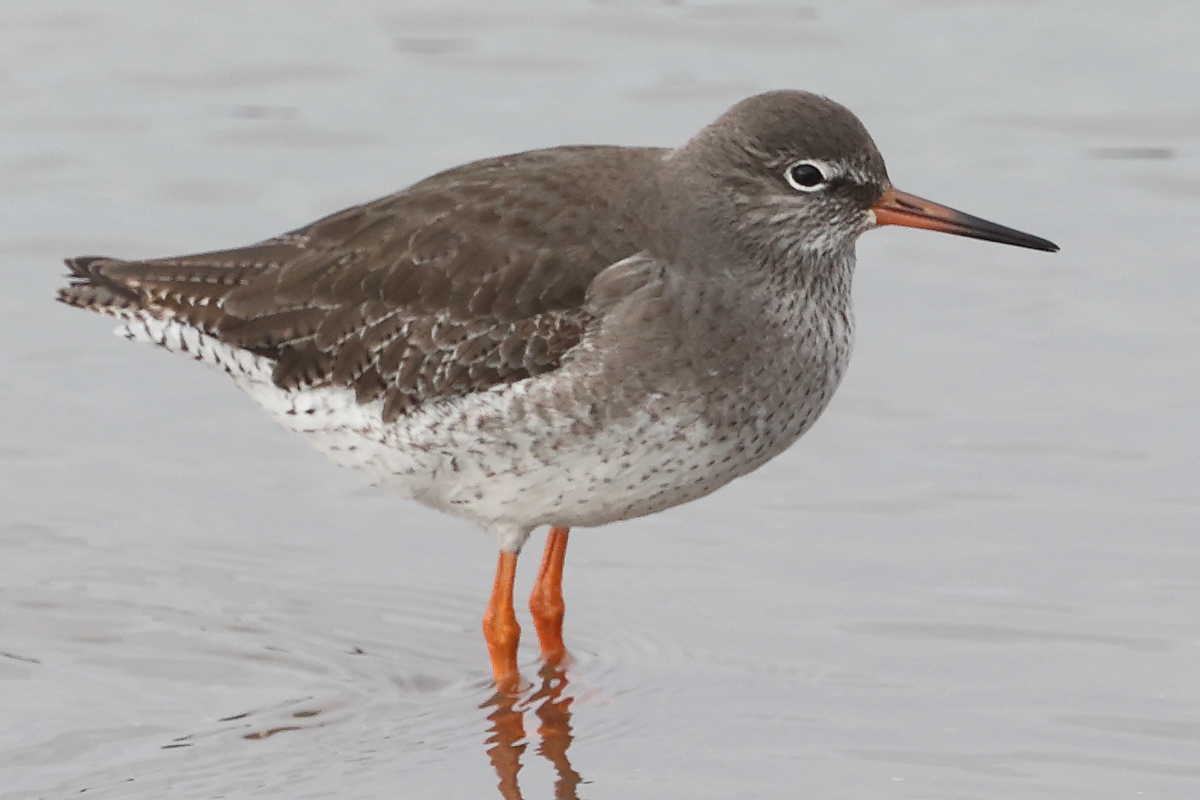
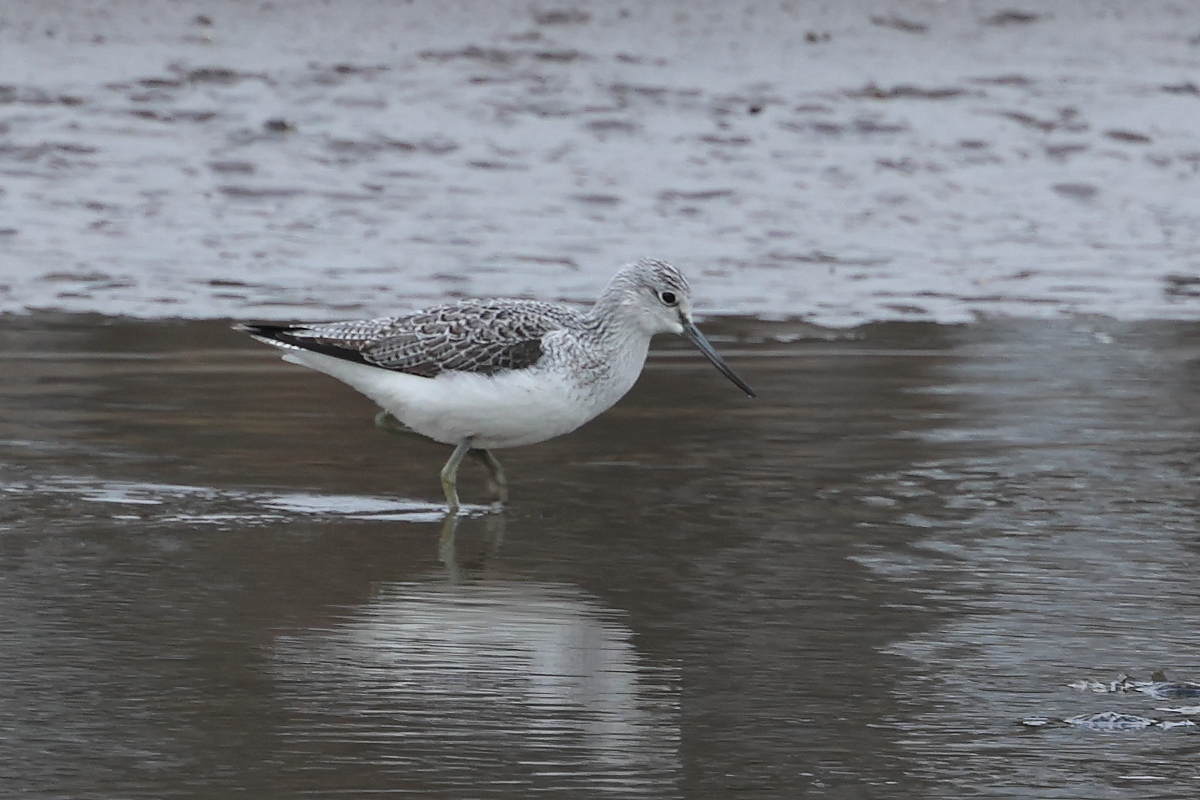
Redshank (above & middle) & Greenshank (below), Aberlady Bay, East Lothian © Nigel Milbourne 2026
Wednesday 28th January
Two exciting bits of news today. Firstly, Melanie & Lionel P. replaced the owl box on the North Shore because the box was deteriorating and the pole had completely rotted through. Thanks to them and Kirsty for co-operating to get this done, hopefully, in time for it to be used this season. Secondly, Rich M. texted me both yesterday and today after spending time looking at Chiffchaffs, and has seen what was probably one of the tristis birds that were present before I came up to Scotland. It’s a shame he hasn’t seen the second bird, but this might be explained by the message sent by Chris P on the weekend, who saw a number of Chiffchaffs by the Top End hide, which is a couple of hundred metres from where we saw the tristis birds originally. The places where they congregate to feed is seemingly determined by the direction of the wind – they seek out sheltered areas to forage for flying insects. Chris, Max and I saw them feeding together during a period of a few days when an unusual south-easterly was blowing.
Monday 26th January
No news from the lake today.
EAST LOTHIAN, SCOTLAND
I had a birding walk in East Lothian with my sister from Yellowcraig to North Berwick and back along the beach. We didn’t see a huge range of species but the Sea Buckthorn at Yellowcraig car park area gave up quite a few passerines including fair numbers of Fieldfare, some Bullfinches, Chaffinches and a flock of Long-tailed Tits plus hangers-on. There wasn’t much on the sea, but along the beach we saw good numbers of Rock Pipit, Pied Wagtail, Linnet and, of note, 14 Snow Buntings. On the way back, the tide had come in a bit and we saw a few Oystercatchers, and the odd Curlew or two.
Saturday 24th January
I had news from Chris P. of a birding walk he had at the lake:
“I visited the lake yesterday with Tony W. at 11:00 very wet and windy with very choppy water. 38 species seen. Highlights, Peregrine on a very fast approach coming in from Ubley. Otter seen from Top End hide. 250+ (254 according to Tony) Pochard. No Wigeon, Goldeneye or Shoveler. Two pairs of Stonechats. Moorhen on its own at Long bay and a pair by the Top End exit gate. Chiffchaffs all around the Top End Hide. Sparrowhawk and Buzzard as we entered by the Lodge. I shook the feeder. Blackcaps amongst the Mistletoe at the Hatchery.” Thanks for your update guys.
Thursday 22nd January
I won’t be reporting from the lake until 1st February unless anyone is kind enough to share their sightings with me for publication and acknowledgment.
Tuesday 20th January [Very windy with intermittent showers]
Phil D., Rob H. and I got together this morning 0930-1225 hrs to do the WeBS count, in what were quite difficult conditions. The lake was full. The wind was howling down the lake, with waves crashing up the dam wall and topping the overspill. As has been the case for a while, there were few birds at the dam end, with the bulk of the Aythya ducks at Top End. Full count details as follows: Canada Goose 82, Mute Swan 5, Shoveler 1, Gadwall 3, Wigeon 2, Mallard 154, Teal 141, Pochard 118, Tufted Duck 256, Goldeneye 7, Coot 241, Little Grebe 7, Great Crested Grebe 3, Lapwing 7, Snipe 9, Common Sandpiper 1, Cormorant 9, Great White Egret 2, Grey Heron 5, Sparrowhawk 1 and Buzzard 2. Gull spp. noted included Black-headed, Common, Lesser and Great Black-backed (no counts made due to the number of aerial birds over the lake and surrounding farmland). I recorded 39 spp. Phil saw an Otter during the survey too. Thanks to all the team; Skip H. and Dave P. who were ready to go yesterday, and Phil and Rob who stepped up today.
While I was at the lake, I saw my first Primrose of the year in flower.
Monday 19th January [Fog until 1130 hrs. Overcast & dry.]
I’ve had to call off today’s WeBS count due to the thick fog this morning.
Sunday 18th January [Rain & fog with very low visibility]
There’s not much chance of seeing any birds at the lake this morning, or for the rest of the day by the look of it, so I thought I’d add some notes about Chiffchaffs by way of trying to explain why I’ve been so fascinated with those that have been occurring at the lake in the last few years. The best site appears to be alongside the stream that enters the lake at Bell’s Bush barrier (under the new boardwalk) on the south side. This is probably due to the preponderance of insects associated with the outfall/overflow from Ubley STW. However, many regulars will have noticed the major engineering works that have been taking place along the south side of the lake this summer/autumn, which is designed to take the Ubley STW outfall to a new STW below the dam (undoubtedly a good thing for the reservoir water quality). It might be expected, therefore, that in coming years this little oasis for wintering insectiverous birds (and bats) will change significantly, and cease to be the attraction that it is currently. So, back to the ‘thorny’ issue of Chiffchaffs. At present, in the new world bird list (AviLIst v2025), Common Chiffchaff is considered to comprise a number of subspecies:
- Common Chiffchaff Phylloscopus collybita
- Phylloscopus collybita abietinus – Scandinavia to Urals, Caucasus, Transcaucasia, and northern Iran.
- Phylloscopus collybita collybita – breeds British Isles eastward to southern Sweden, and from France and northern Spain to Poland and northwestern Türkiye; non-breeders move mostly to Mediterranean and from northwestern and western Africa (including Canary Islands) to Middle East
- Phylloscopus collybita brevirostris – highlands of western Türkiye and Black Sea coastlands of northern Türkiye
- Phylloscopus collybita caucasicus – east of range of brevirostris at lower elevations southward to Armenia
- Phylloscopus collybita menzbieri – northeastern Iran (eastern Elburz Mountains and Khorasan Mountains) and southwestern Turkmenistan
- Phylloscopus collybita tristis – Ural Mountains to northeastern Iran, northern India, and Bangladesh.
AviList v2025 extended includes the following decision about Common Chiffchaff “Taxon tristis is treated as a subspecies of P. collybita based on available evidence. Sometimes split based on differences in plumage, vocalizations, and migratory strategy; however, mitochondrial and genomic DNA data (Marova et al. 2017; Shipilina et al. 2017) indicate the presence of a broad hybrid zone between tristis and P. c. abietinus.”
Currently, three subspecies have been admitted to the British List – abietinus, collybita and tristis. The problem for birders in the field is being able to distinguish them. In 2005 Dean and Svensson provided some clarification for the identification of tristis (British Birds 98: 396-410) to aid county record committees to make judgements on those birds submitted to them as being Siberian Chiffchaffs, as follows:
-
- Absence of olive in the crown and mantle
- Absence of yellow away from the underwing
- Presence of a grey-brown or pale brown hue in the upperparts
- Presence of warm buff in the supercilium and ear-coverts
- Presence of buff at the breast-sides/flanks
- Very black-looking bill and legs
- A thin, piping near-monosyllabic Bullfinch-like or Dunnock-like call
- A song markedly different from western Chiffchaff’s
Arising from this, another problem is that there will be variation in how the various county record committees apply those criteria in arriving at their decisions. However, it is considered worthwhile, at least, attempting to record the occurrence of such birds. A number of Chiffchaffs captured at Chew Valley Ringing Station were DNA-sequenced, and this showed that such individuals are appearing in our area, so it is worth trying to photograph and record vocalizations of birds that might be considered to be tristis for the time being. Records submitted, that are accepted, will be included in the Avon Bird Report. I will add, that in my experience, I’ve heard no potential tristis birds calling at the lake and, as a result, I have no recordings to share. Moreover, given the sheer number of Chiffchaffs present in such a small area at present, I should think it would be very difficult to assign any recordings to specific individuals anyway, unless a sound recordist and photographer worked together. Up for the challenge anyone?
Saturday 17th January [Sunny spells]
The lake is full, with water going down the spillway.
Having run my milestone 25th Parkrun this morning, it took me a little while to get myself showered and up together to get out to the lake this afternoon. As the sun was out I went directly to look for the Chiffchaffs again, and found them in the hedge as before. I spent an hour or so with them and my camera until the sun went behind the hill. Again, there were at least two putative SIBERIAN CHIFFS among them. I walked Top End and across the dam as the light faded. I saw five (three adult drake) Goosanders, but when I arrived it wasn’t until I got to Rainbow Point that I saw more than a handful of waterfowl. I counted most of one of two flocks of Pochard and reckon there were, comfortably, over 200 present, with nearly as many Tufted Ducks. The Teal were well hidden, and apart from Coot and Mallard, it was pretty quiet on the water. I counted six Grey Herons, a Great White and four Cattle Egrets. At the dam, Jane W. told me she’d seen the Otter a couple of times from the dam over the festive period during the day, but there was no sign this evening. Over the first part of the Winter period, it has been curious to see very few gulls roosting on the lake. Until this winter, recent years have seen a couple of thousand Black-headed Gulls by November and increasing numbers of large gulls roosting during the early winter period – I wonder what has brought about the change. 38 spp.
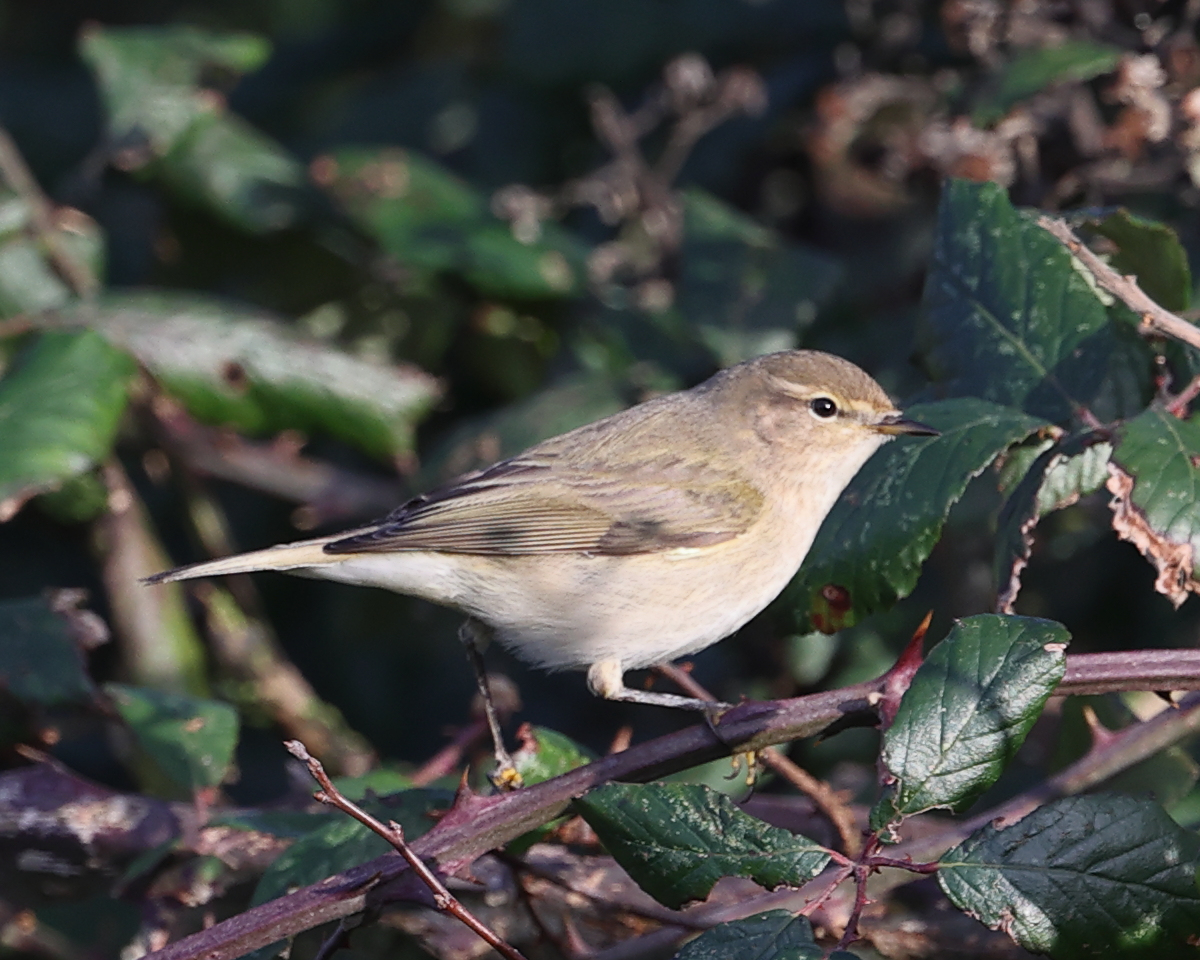
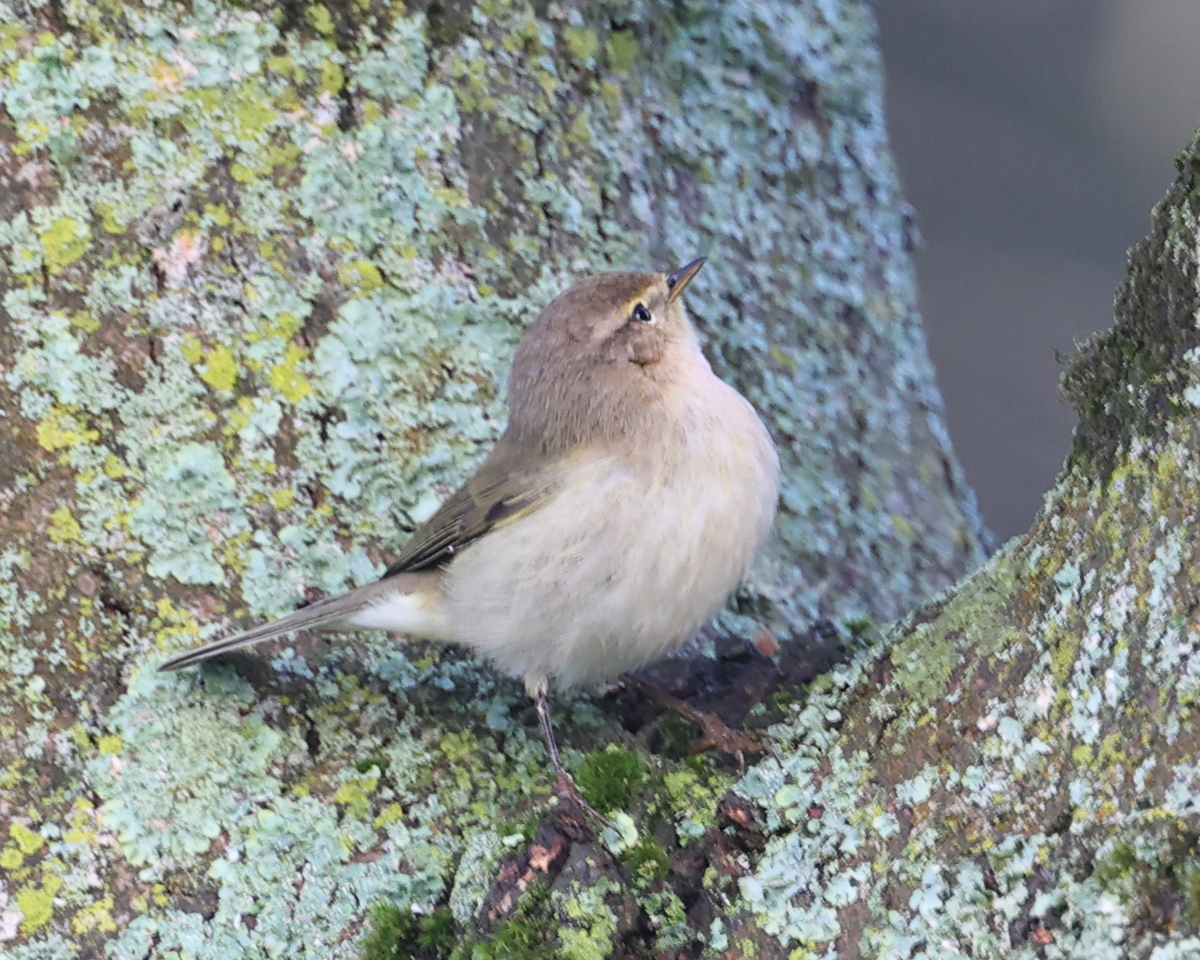
Putative Siberian Chiffchaffs © Nigel Milbourne 2026
Friday 16th January [Mild & sunny, with occasional showers in the afternoon.]
I spent the afternoon at the lake with my camera, hoping to catch some images of the Chiffchaffs that Chris P. and I saw last Saturday. It was pretty special, with at least ten Common Chiffchaffs and one, probably two, SIBERIAN CHIFFCHAFFS showing very well along a short stretch of sheltered hedge. I realise I haven’t done the views justice with these shots, but I’ll have another go when I get the chance. I met Max who joined me for a while, and he told me he’d seen a few House Sparrows on the south side road while he was birding on foot – which, you might be surprised to learn, is quite an unusual occurrence. There was a Common Sandpiper on the dam as I headed home but, that aside, I only saw the regular suite of species. 44 spp.
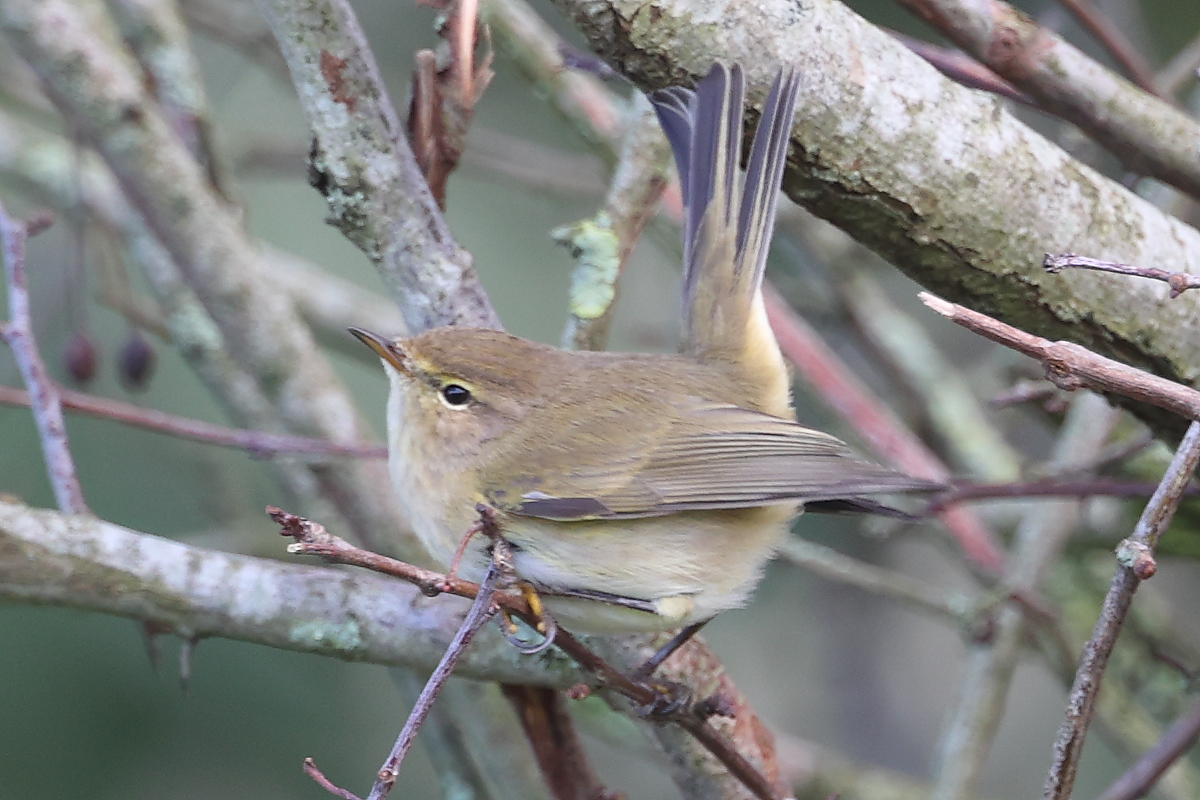
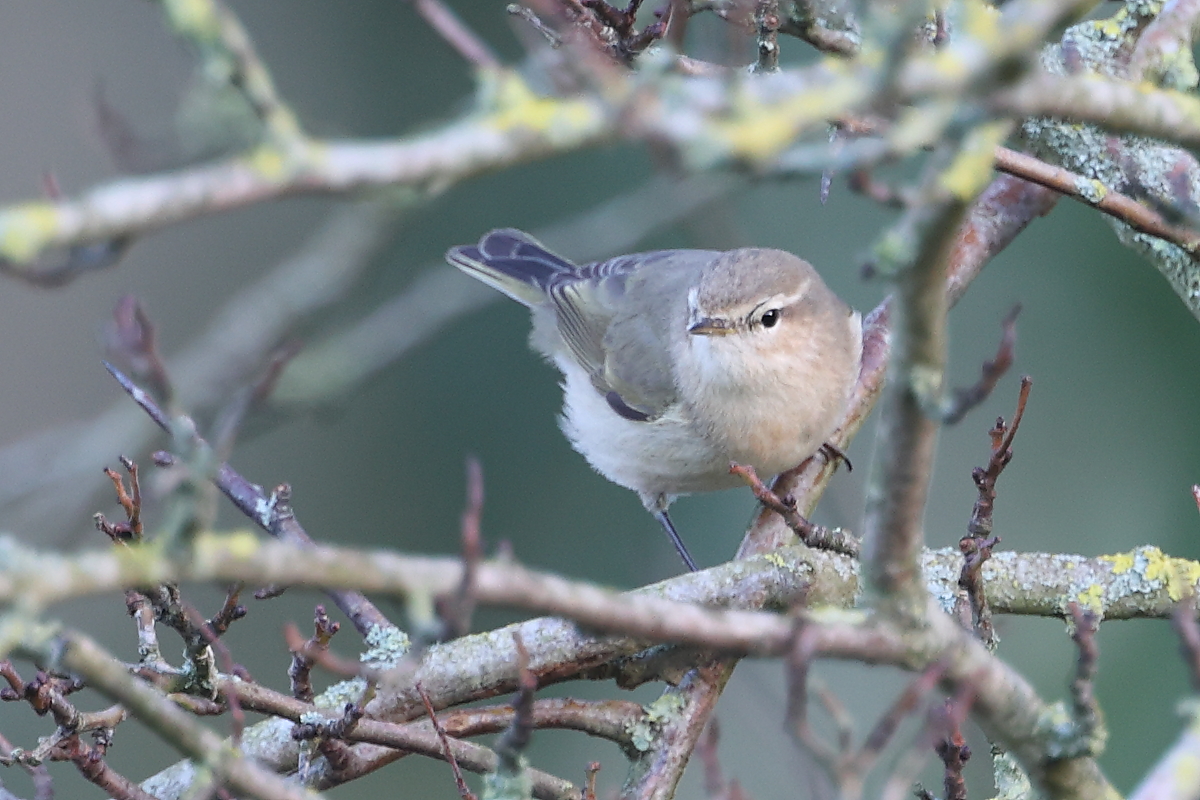
Two of the Chiffchaffs seen today, the lower picture at least shows a putative Sibe © Nigel Milbourne 2026
Thursday 15th January [Steady rain for most of the day]
I drove down to the lake at lunchtime in the rain and had a drive around before going to the gym. There wasn’t much change in the waterfowl numbers by the look of it, and the water still wasn’t quite flowing down the spillway yet. The hedge-laying team were working hard in the rain and have completed the hedge along Long Bay and are currently working at the head of the bay. I’m so looking forward to see how the hedge grows up over the next few years. I counted 117 Pochard at Wood Bay Point, and saw one of the Stonechats at Wood Bay. 26 spp. recorded in 39 minutes.
Tuesday 13th January [Mainly overcast, with occasional showers.]
I got to the lake at 1600 hrs and saw two Egyptian Geese on the dam, and while looking through a few Tufted Duck in Butcombe Bay I spotted an Otter fishing around The Island. There was very little else at the dam end. A single Great White Egret on Rainbow Point, circa 70 Pochard, and probably as many Tufties were gathering at Top End, with a few Goldeneye. 23 spp.
Saturday 10th January [A very pleasant, windless, sunny day.]
I had breakfast with Mark H. and Ken A. to discuss some bat work, then spent the afternoon at the lake with Chris P. birding from the Lodge to Top End hide and back. Having seen three Common Chiffchaffs yesterday, and with not a breath of wind today, I hoped to spend a bit of time carefully checking the ID of each of those we might see. It was a very productive afternoon that saw an Otter show very well during our walk, and we saw no fewer than seven Chiffchaffs. I’m pretty confident that we saw at least two SIBERIAN CHIFFCHAFFS foraging alongside several Common Chiffchaffs. Hopefully, I’ll get a chance to go and photograph them in the coming days, although the weather forecast doesn’t look too good. I saw the male Marsh Harrier again, while Chris was trying to get some phone video of the Otter, and we both saw a remarkable seven Stonechats. I logged 53 spp. while Chris had at least one other in addition.
Friday 9th January [Sunny with a chilly wind]
I spent the afternoon birding on foot from the Lodge to Top End gate and back. There were three Goosander (one drake) off the dam, a squealing Water Rail, a Great White Egret, three Chiffchaffs, and four Stonechats of note, but the highlight for me was an adult male Marsh Harrier (with a dangling leg) that simply glowed in the sunshine as it harassed the Teal at Top End. 45 spp.
Thursday 8th January [Rain spreading in from mid-morning for the day. A bit milder than of late.]
I had a morning appointment in Chew Stoke, and went to the lake late morning, but the rain had already started ahead of the arrival of Storm Goretti which is due overnight. I drove the south side of the lake and popped into Top End hide. I saw saw three Chiffchaffs together, and a pair of Stonechats, but there was nothing else of particular interest other than the team of hedge-layers working away in the rain to complete the hedge at Long Bay. Chris C. reported the Common Sandpiper on the dam this morning. I recorded 29 spp.
Tuesday 6th January [Mainly sunny, & marginally warmer.]
It’s taken me three visits this year, but I finally saw a Moorhen today! My birding walk was from Home Bay to Top End hide and back, then across the dam and back, and I can report that work to lay boundary hedges around the lake, has been started at Long Bay in the last couple of days. Long Bay itself was largely covered in ice this morning, as was a significant portion of the middle and top end of the lake. However, by the time I made my way back, it was evident that a thaw had set in and the ice coverage had reduced significantly. There was a steady stream of small flocks of Lapwing heading west during my walk, and the waterfowl were obviously grouped a bit more than usual due to the ice. There were quite a few Teal standing on the ice edge off Peg’s Point, but by the time I got back to my car they’d dispersed, so I couldn’t really scope them to look for anything unusual among the flock. There were small numbers of Redwing around, but an almost complete lack of Fieldfare to be seen, probably due to the absence of berries on bushes around the lake. Today, I noted 50 spp. including two Egyptian Geese, 47 Wigeon, three drake Shoveler, a Stonechat, a Great White Egret, a Red Kite, a Chiffchaff, a sizeable flock of loafing Common Gulls, a drake Goosander, and a Kestrel.
Saturday 3rd January [Wall-to-wall sunshine. Cold.]
Chris P. and I arranged to meet this afternoon to bird the south side of the lake on foot. We walked for three hours from the Lodge to the Hatchery and back, and noted ice forming in the sheltered margins, an adult drake Goosander, a Snipe, four Great White Egrets, at least 26 Lapwings, a Blackcap, and a flock of at least 30 Siskins in a list of 51 spp. There was no sign of the Barnacle, or any Egyptian, Geese today. We left the Lodge at dusk, and stopped briefly at the dam for a last look before going our separate ways, just as the Wolf supermoon came up over the horizon. Neither Sandpiper was on the dam at the late hour, but we were treated to a wonderful few minutes watching an Otter diving for food just a few metres off the south end of the dam wall in the fading light, and moon’s bright reflection. A stunning end to a freezing, but exhilarating, walk.
Friday 2nd January [Wall-to-wall sunshine. Cold.]
A happy, and peaceful, New Year to you all.
I went to the lake to fill the feeder this afternoon, and birded my way on foot from the Lodge to the Hatchery and back. I managed to put together a list of 55 spp. including Green and Common Sandpiper on the dam, nine Egyptian Geese, a Barnacle Goose, 15+ Goldeneye, three Goosanders (two adult drakes), a pair of Stonechats, male and female Blackcaps, plus three Great White and a single Little Egret. Notable by their absence were Lesser Black-backed Gull, Moorhen, and Song Thrush – but one usually misses a few of the resident species when day listing. Chris P. told me he’d seen Shoveler, Pintail and Kestrel yesterday, and Snipe today. The British List has been revised recently, so I will update the Blagdon Bird List accordingly, then post the year list on the 2025 page. I also have to add some dates, and additional species, to the 2024 list in the next few days.
Thursday 1st January
Having arrived at Tamar Trails parkrun near Gunnislake, on the Devon/Cornwall border at 0830hrs, we were turned away from the car park, as ice on the course meant the run had been cancelled. What a shame, as student friend Maggie, and I, had planned to complete our respective 25th run togther. After breakfast in Tavistock, where we saw two people fall on the invisible black ice on the roads and pavements, I drove home. I just had enough time to get out for a run over the fields to Burrington and back before it got dark, during which I saw a Red Kite up the hill looking for somewhere to roost.